Sunday, April 10, 2011

List of Jewish Culture, etc Festivals 2011

At the Budapest Jewish Summer Festival. Photo (c) Ruth Ellen Gruber


By Ruth Ellen Gruber

As usual, I am trying to put together a list of as many as possible of the numerous Jewish festivals -- culture, film, dance, etc -- that take place each year around Europe. Please help me by sending me information!

The big culture festivals and other smaller events make good destinations around which to center a trip. Some, like the annual Festival of Jewish Culture in Krakow, are huge events lasting a week or more, which draw thousands of people and offer scores or sometimes hundreds of performances, lectures, concerts, exhibits and the like. Other festivals are much less ambitious. Some are primarily workshops but also feature concerts. Many of the same artists perform at more than one festival.

 The list will be growing and growing -- and again,  I ask my readers to please send me information and links to upcoming events. Thanks!


ALL OVER EUROPE -- Sept. 4 -- 12th European Day of Jewish Culture. The theme this year is "Facing the Future."

AUSTRIA

April 3-7 -- Vienna -- Jewish Film Noir festival

Nov. 5-2- -- Vienna -- KlezMORE music festival


CZECH REPUBLIC

 April 28-May 1 --Mikulov -- Days of Jewish Culture

June 12-16 -- Terezin -- Defiant Requiem performances

July 7-10 -- Boskovice -- UniJazz/Boskovice Festival. The festival is focused on saving and restoring of local Jewish quarter.

July 25-30 -- Trebic --  Trebic Jewish Festival, held in one of the most extensive and best-preserved old Jewish quarters in Europe, part of the town's UNESCO-listed historic center.

July 25-26 -- Namest nad Oslavou -- Jewish music at Folk Holidays Festival

FRANCE

May 10-13 -- Saint-Gildas-des-Bois -- Festival MusiqueS Klezmer

June 14-30 -- Paris -- Festival of Jewish Cultures

July 2-10 -- Bréau (Gard) -- Le Yiddishland à la rencontre des Cévennes

GERMANY

March 11-13 -- Fuerth -- International Klezmer Festival

May  18-31   -- Berlin/Potsdam -- 17th Jewish Film Festival 

June 23-26 -- Berlin -- "Sounds no Walls" -- Jazz and Jewish Culture

July -- Weimar -- Yiddish Summer Weimar

Oct. 23-Nov. 6 -- Dresden -- 15th Yiddish Music and Theater Weeks

November 12-30 -- Munich -- 25th edition of Jewish Culture Days


HUNGARY

April 28-May 4 -- Budapest -- First Israeli Documentary Film Festival

June 5 -- Budapest -- Judafest

Aug. 4-7 -- Bank Lake -- Bankito Festival

Aug. 27-Sept. 5 -- Budapest -- Jewish Summer Festival 

ITALY

May 7-9 -- Ferrara -- Festival of the Jewish Book in Italy


June 2-3 -- Casale Monferrato -- Oy Oy Oy Festival


June 26-July 17 -- in val d'Aosta -- Centrad festival/workshops in Ashkenazic culture

Nov. 12-16 -- Rome -- Pitigliani Kolno'a Festival (music, film, etc)

Nov. 20-27 -- Venice -- Festival of Polish-Jewish Culture 

NETHERLANDS

October -- many venues around the country -- International Jewish Music Festival -- . See the web site for a calendar of Jewish music events.

POLAND

May 1-6 -- Czestochowa -- International Festival of Sacred Music


May 6, 7, 13 -- Opole -- Days of Jewish Music and Culture

May 14-22 -- Warsaw -- Otwarta-Twarda Jewish Festival

May 15-18 -- Warsaw -- 14th Jewish Book Days

May 29-June 3 --- Wroclaw -- 13th Simcha Jewish Culture Festival

June 1 -- Szydlow -- 9th Encounters with Jewish Culture

June 4 -- Krakow -- Night of the Synagogues

June 11-17 -- Oswiecim -- Oswiecim Life Festival (international music festival with Jewish content, held in the town where Auschwitz is located)

June 18-19 -- Chmielnik -- 9th Encounters with Jewish Culture

June 24-July 3 -- Krakow -- Festival of Jewish Culture

August 19-21 -- Lublin -- Shalom: Encounters with Jewish Culture

August 20-21 -- Lelow -- 9th Cholent and Ciulim festival

August 27-Sept. 4 -- Warsaw -- Singer's Warsaw Festival


ROMANIA

June 16-19 -- Bucharest -- Klezmer & More Festival

June 20-26 -- Bucharest -- First Bucharest Jewish Film Festival


SERBIA

June 12-21 -- Belgrade -- Ethno Fusion Fest (in courtyard of Belgrade synagogue)


SWITZERLAND

June 18-19 -- Geneva -- Friends of Jewish Music Festival

UKRAINE

July 24 -- L'viv -- L'vivKlezFest

Stones and Stone-carver images from a century ago

Here's a cross-post from candlesticksonstone

By Ruth Ellen Gruber

The wonderful imagery on East European tombstones was created by talented and extraordinarily creative stone-carvers who are now, for the most part, anonymous. Everyone so often, a photograph of a more recent traditional stone-carver turns up. Sergey Kravstov has sent me the image below.


Stone-cutter in Ostroh, Volhynia (c. 1912-14)


The illustration is from the catalogue: The Jewish Art of Solomon Yudovin (1892-1954). From Folk Art to Socialist Realism, by Ruth Apter-Gabriel (Jerusalem, 1991). Yudevin was a wonderful artist born near Vitebsk, the same town where Marc Chagall was born.

The drypoint at right, dated 1939, is clearly based on the photo at left, taken in Ostroh/Ostrog in Volhynia — probably during the expedition into Ukraine led by the Yiddish writer An-Sky in 1912-14 to document the rapidly disappearing Jewish cultural life of the shtetl. This would mean that it was taken by Yudovin, who was a photographer on that expedition. It’s a very dramatic shot and to me looks staged!

I have tried to figure out what the design he is carving is — but I can’t make it out….

Here below is a wood cut by Yudevin that shows a funeral at a shtetl’s Jewish cemetery — including the gravestone of a woman that bears the typical candlestick motif.

Wednesday, April 6, 2011

Poland -- Jewish life in Krakow article

Jonathan Ornstein and Staszek Krajewski at a discussion on Jewish identity in Poland at the Krakow JCC in 2010. Photo (c) Ruth Ellen Gruber). 


By Ruth Ellen Gruber

The Jerusalem Post ran a long article about Jewish life and experience in Krakow, focusing on the role and work of the new Jewish Community Center, which opened in 2008. The author, Israel Kasnett, asks the usual questions, and writes about many of the usual scenes, paradoxes and tropes. I'm glad though to see a generally positive spin in his description of what I have called the "new authenticities" in the city.
For many people, Jewish life cannot conceivably flourish in Krakow – a city so close in proximity to the Auschwitz and Plaszow concentration camps where more than a million people were murdered. To them, Krakow has simply become a stopover on the way to the camps, to see where Schindler’s List was filmed or to visit the graves of ancestors.

But 66 years after the war, and 22 years since the fall of communism, the question remains: Can Krakow’s Jewish community flourish once again? My recent visit to its Beit Chayil Jewish Community Center proved that today there exists more than just death and a Jewish past.
 Read full article HERE

Tuesday, April 5, 2011

The International Kite Festival 2011 @ Pasir Gudang, Johor

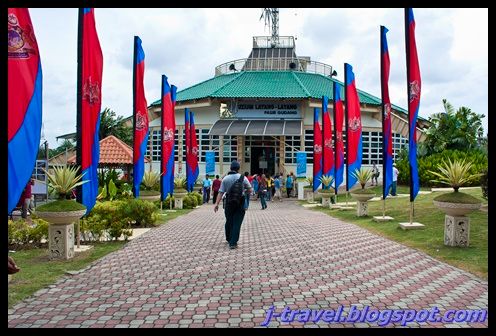
We visited The International Kite Festival 2011 on the Saturday morning and it was not a good weather that day...As usual, the Bukit Layang Layang (Kite Hill) (N1.47480 E103.90641) area was crowded and packed with peoples everywhere...

The Kite Museum of Bukit Layang Layang, Pasir Gudang

This time, I don't really take note on the stalls along the way, it was almost the same every year. There was a group of children that cheer up the area! I like to see those smile on their face! :)

The group of school children

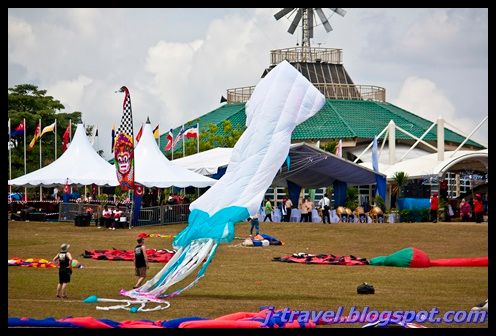
We went to the field immediately and trying to catch some actions with the kites around...I believe the groups from all over the World are the same as previous year.

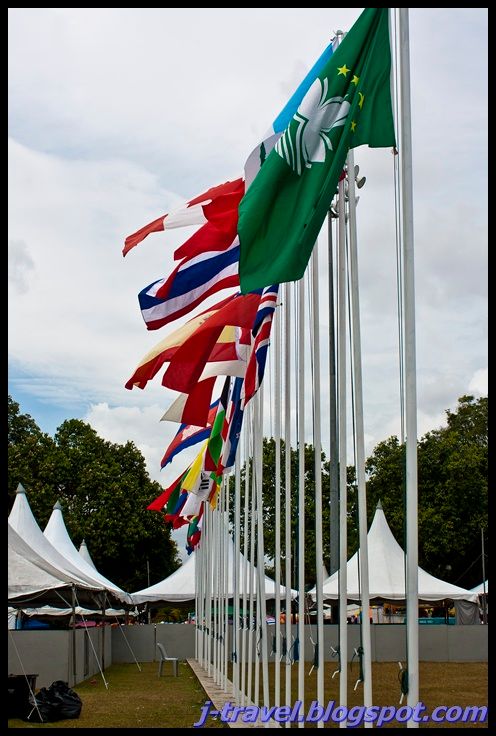
Country flags of all the participants

It was not a sunny day and also Not windy at all! I believe that was a bad news for all the Big Giant Kites in the field...
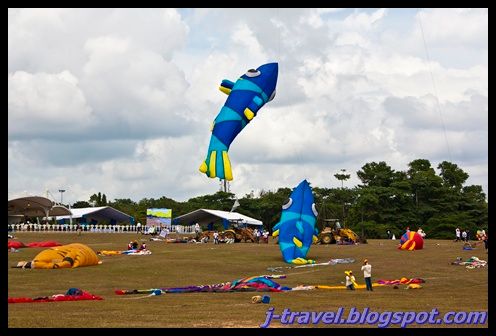
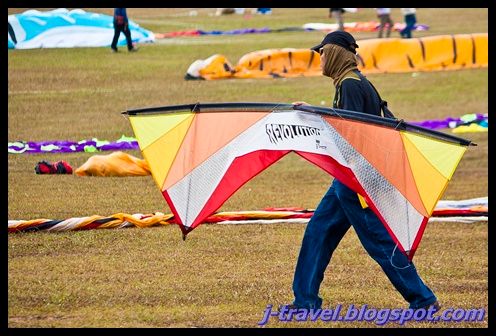
I managed to took some photos on the sky...during that time, most of the huge kites were lying on the field.

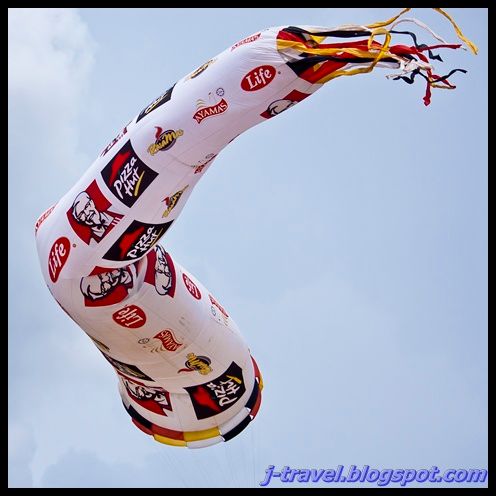
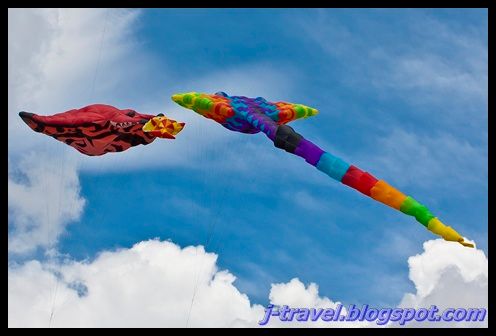
You can see the Big Kite every year...


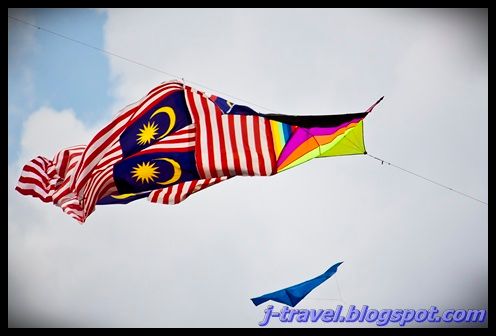
The Malaysia flag

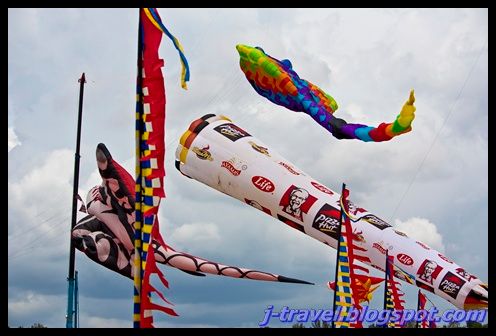
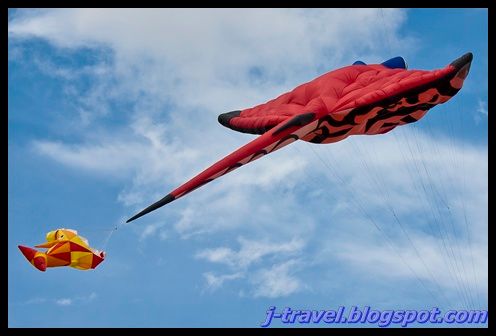
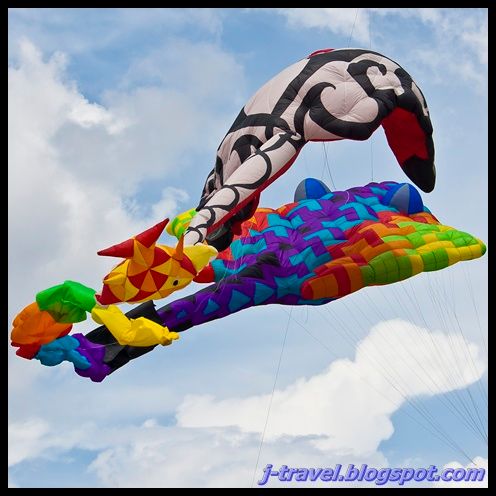
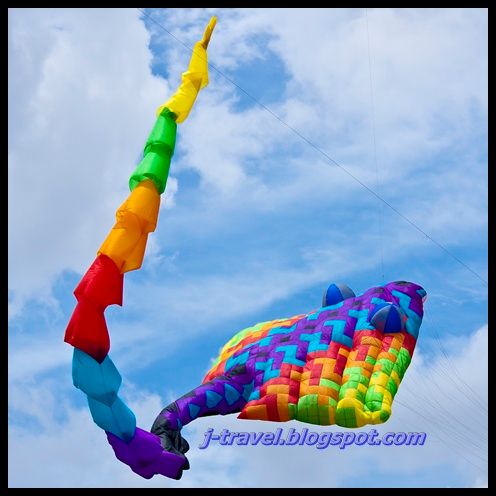
Follow by the Brotherhood of Stingrays...


Some of the Big heavy kites trying very hard to fly, but...unfortunately the wind was Not strong enough to lift them...too bad, we don't have a change to snap the Big kites too! :(

The Big Kites trying hard to lift up, but...

Suddenly the sky does not corporate enough and heavy down pour without a notice! Everyone ran like hell to find a place to hide! Except those in the field...I saw them really enjoyed dancing in the rain...haha!

Some actions on the ground...

Doesn't matter rain or shine...


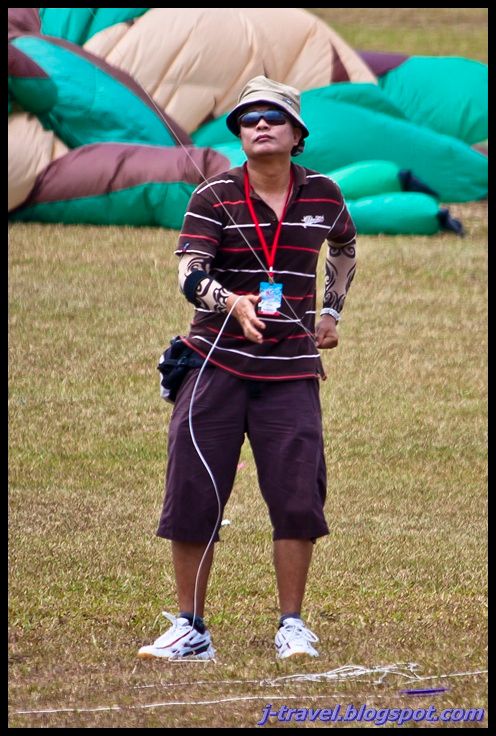
I like this action!

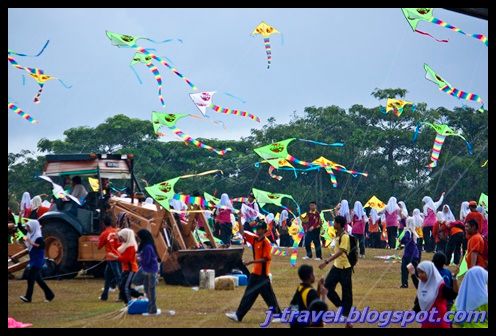
After the rain stop, we saw a really Nice scene! Many young boys and girls suddenly ran into the field with their little kites in hand! That was Great!!

We were there for about 2 hours, then the rain started to pour again...that spoiled our moods to continue watching the beautiful kites flying...and all of them were just lying on the field...
Disappointed! We will be back again next year!

The Location Map of Bukit Layang-Layang (Kite Hill) of Pasir Gudang, Johor.


Monday, April 4, 2011

Publication -- New book to which I contributed is out: Philosemitism in History


By Ruth Ellen Gruber

I'm delighted to announced the publication of "Philosemitism in History," edited by Jonathan Karp and Adam Sutcliffe (Cambridge University Press). I contributed one of the 14 chapters  -- "'Non-Jewish, non kosher, yet also recommended': beyond 'virtually Jewish' in post-millenium Central Europe."

Philosemitism in History
Too often philosemitism, the idealization of Jews and Judaism, has been simplistically misunderstood as merely antisemitism "in sheep's clothing." This book takes a different approach, surveying the phenomenon from antiquity to the present and highlighting its rich complexity and broad impact on Western culture. Philosemitism in History includes fourteen essays by specialist historians, anthropologists, literary scholars, and scholars of religion, ranging from medieval philosemitism to such modern and contemporary topics as the African American depictions of Jews as ethnic role models, the Zionism of Christian evangelicals, pro-Jewish educational television in West Germany, and the current fashion for Jewish "kitsch" memorabilia in contemporary East-Central Europe. An extensive introductory chapter offers a thorough and original overview of the topic. The book underscores both the endurance and the malleability of philosemitism, drawing attention to this important but widely neglected facet of Jewish-non-Jewish relations. This book offers a broad and ambitious overview of the nature and significance of philosemitism in European and world history, from antiquity to the present. It underscores both the endurance and the malleability of philosemitism, drawing attention to this important but widely neglected and generally misunderstood facet of Jewish-non-Jewish relations.
Table of Contents
Introduction: a brief history of philosemitism Adam Sutcliffe and Jonathan Karp 
Part I. Medieval and Early Modern Frameworks: 
1. Philosemitic tendencies in medieval western Christendom Robert Chazan
2. The revival of Christian Hebraism in early modern Europe Abraham Melamed
3. The philosemitic moment? Judaism and republicanism in seventeenth-century European thought Adam Sutcliffe
 
Part II. Three European Philosemites: 
4. William Whiston's Judeo-Christianity: millenarianism and Christian Zionism in early enlightenment England Adam Shear
5. A friend of the Jews? The Abbé Grégoire and philosemitism in revolutionary France Alyssa Goldstein Sepinwall
6. Ordinary people, ordinary Jews: Mór Jókai as Magyar philosemite Howard Lupovitch
 
Part III. The Cultural Politics of Philosemitism in Victorian Britain and Imperial Germany: 
7. Bad Jew / good Jewess: gender and semitic discourse in nineteenth-century England Nadia Valman
8. Anti'philosemitism' and anti-antisemitism in imperial Germany Lars Fischer
9. From recognition to consensus: the nature of philosemitism in Germany, 1871–1932 Alan T. Levenson
 
Part IV. American Philosemitism: 
10. Ethnic role models and chosen peoples: philosemitism in African-American culture Jonathan Karp
11. Connoisseurs of angst: the Jewish mystique and postwar American literary culture Julian Levinson
12. 'It's all in the Bible': evangelical Christians, biblical literalism and philosemitism in our times Yaakov Ariel
 
Part V. Philosemitism in Post-Holocaust Europe: 
13. What is the opposite of genocide? Philosemitic television in Germany, 1963-1995 Wulf Kansteiner
14. 'Non-Jewish, non kosher, yet also recommended': beyond 'virtually Jewish' in post-millenium Central Europe Ruth Ellen Gruber.

Sunday, April 3, 2011

Poland -- Restored Renaissance Zamosc Synagogue to be Inaugurated

 Photo from FODZ web site: fodz.pl


By Ruth Ellen Gruber

As I've reported earlier, restoration of the beautiful and important renaissance synagogue in Zamosc, in southeastern Poland, has been completed -- and the dedication of the building, which will be used for cultural purposes, will take place Tuesday. I wish I could attend the ceremony!

According to the Foundation for the Preservation of Jewish Heritage in Poland, FODZ, which oversaw the restoration project, the synagogue will house a tourist and cultural information center for the FODZ-sponsored Chassidic Route. A Multimedia Museum of the History of the Jews of Zamosc and the Surrounding Area will also be established there,  in cooperation with the Galicia Jewish Museum in Krakow -- www.galiciajewishmuseum.org . A part of the area will also be adapted for the needs of local NGOs.

Events at the dedication will include a two-day conference, “History and Culture of the Jews in Zamosc and the Zamosc Region," which will be held in the synagogue and kick off a project documenting Jewish history in the town.


AP runs a lengthy story, highlighting the synagogue's history and the complex restorations process.

The near-absence of Jews today "brings to light what war and genocide and the Holocaust really mean," said Monika Krawczyk, CEO of the Foundation for the Preservation of Jewish Heritage in Poland, the Warsaw-based group that oversaw the preservation work. "Although the Jews in Poland today are small in number, the heritage is absolutely huge."

The renovation took about a year and cost euro1.7 million ($2.4 million), funded mostly by grants from Norway, Iceland and Liechtenstein.

The restored synagogue will be presented to the public Tuesday in a ceremony attended by Jewish leaders, U.S. and Israeli diplomats and city officials. After that, it will serve occasionally as a house of worship for Jewish tourists who visit death camps in the area, including Auschwitz, Belzec and Majdanek. Ultra-Orthodox Jews are also drawn to the region because many founders of the Hassidic movement were from Polish and Ukrainian towns.

Mainly it will serve as a local community center, offering art students a place to show their work, schools a place for seminars, musicians a site for small concerts.

Saturday, April 2, 2011

Deciphering epitaphs

By Ruth Ellen Gruber

I learned from a recent Philologos column in The Forward about Madaleine Isenberg, who makes a career of deciphering insciptions and epitaphs on Jewish gravestones -- and coined the term "stelaeglyphologist" to describe her profession. So far, she has worked on more than 3,200 such inscriptions in 20 different cemeteries in Slovakia.

Her skills are greatly needed, as inscriptions on tombstones can be complex, poetic, and full of biblical references and abbreviations. Some include complicated acrostics and other veiled references. And, of course, many matzevot are weathered and eroded.

Several online resources, such as one of JewishGen.org,  provide some of the rudiments -- and which, in fact, have aided me greatly in trying to read inscriptions. But most inscriptions are far too complex.....