Wednesday, June 8, 2011

Hungary to Poland trip Part I -- a Jewish cemetery uncovered....

Revealed on the road side. Photo (c) Ruth Ellen Gruber
 
By Ruth Ellen Gruber

I'm beginning to post material from my recent road trip to Hungary and Poland; it was somehow difficult to get things online when traveling....

My itinerary took me from Budapest to Sanok and other towns in the far southeast corner of Poland, and then to Krakow. Most of the route through Hungary is four-lane motorway, but from Miskolc north to the border with Slovakia it's still a two-lane highway.

The first time I recall driving this way was in 1992, when I was researching my book "Upon the Doorposts of Thy House: Jewish Life in East-Central Europe, Yesterday and Today." One of the chapters of that book is a long essay, "Wine Merchants and Wonder Rabbis" about the links that connected northern Hungary and southern Poland -- wine going north, Hassidism going south.

At that time, the only person I encountered who remembered the existence of the Jewish cemetery of Méra, a village in northern Hungary in the road to the Slovak border, was a malodorous old drunk, who got in the car and guided me there. I found the broken frame of a gate and a few eroded tombstones imbedded in a thick wall of brush just off the side of the main road.

The last time I had driven that way, a few years ago, I hadn't been able even to make out where the cemetery was, it was so overgrown. There seemed to be nothing.  I feared it was totally lost -- and with it,  the memory of the Jews who had lived there.

So this time, I was quite surprised to find that the cemetery had been cleared of brush, bushes, under- and overgrowth, with the stones fully exposed. In fact, I was astonished! Even the grass/weeds had been freshly cut! (I'm not sure, though, who has carried out the work or when it was done.)

Photo (c) Ruth Ellen Gruber

What was revealed, however, was the story of death and vandalism as well as remembered life... some of the stones had been broken or smashed...., but the fragments had been gathered and stood together.

Photo (c) Ruth Ellen Gruber


But...regardless -- there they were! Clean, cleared, exposed, not submerged any more out of sight out of mind;  revealed for all to see!

Galapagos Memories

Hello!

I still remember the first time I went to Galapagos. It was in 1994 and I was working at Pamir Travels & Adventures, owned by long-time friend and mentor Hugo Torres, doing a traineeship in Sales and Marketing. Those were the last days before email; I actually remember installing the first PC in Hugo’s office with an email account. For all the beauty and peace I find in the natural wonders of the continent I have called home for the past 15 years, I still get bewildered by the pace of technological development we have seen in just about the same time frame. If only we would apply more of our technological creativity to finding ways to protect the very world we live in, we would be way past trying to create paradise on earth, I bet you.

I was halfway through my traineeship when I had a meeting with Hugo and his wife Mireilla about how actual travel experience could enhance the sales process. That same afternoon, we had a group arriving from Germany. Since at the time I was the only one in the office speaking German, Hugo asked me if I wanted to accompany the driver to go and receive the group. The group consisted of Dr. Gerd and Mrs. Christel Gigler and some of their best friends, who had come to Ecuador to celebrate their 25th marriage anniversary in style. We had a nice conversation aboard the bus on the way to their hotel and they asked me to accompany them on their city tour the next day, which I did. The day after we were bringing the group to the airport for their flight to the Galapagos Islands, when Gerd all of a sudden asked me: “Bart, we have chartered a ship for our honeymoon, it has 10 beths and we are 9; would you like to join us?” I needed to ask him to repeat that twice before I really understood what he had just said, and when I looked at Mireilla who was with us that day, she nodded and gave me a look, as if to say “what are you waiting for? This is a chance in a lifetime!” So, after some (about 5 seconds) of thinking I agreed and after some practical issues (such as me not having brought anything to the airport but the clothes I was wearing and for some reason my passport) were solved, I found myself with my new friends on my way to the Galapagos…

Samba was a refurbished, formerly Dutch trawler, which today would be considered a luxury, small-group cruise vessel. With five cabins it was actually smaller than most ships one will find, but therefore that much cozier when traveling in a group of friends. We sailed the 8-day, westerly route and it was one of the most amazing trips I have made in my life, when it comes to marine wildlife. I watched, swam and played with so many different species of animals I can hardly remember them all: Giant turtles, white-tipped reef sharks, golden rays, manta, sea lions, leather back turtle hatchlings, black hawks, albatross, red- and blue-footed boobies, spinner dolphins, blue whales, frigates, finches, Galapagos lizards, and so many more that it still dazzles me thinking back on it.

The only experience to come close to this was my 6-hour boat ride on the “Golfo Nuevo” Bay near the Valdes Peninsula, when I actually had an 18m (54ft) Southern Right Whale come up alongside our zodiac, look me right in the eye, kind of asking for a tap on the back. I did and he (or she; I did not verify) started spinning slowly around his horizontal axis, allowing me to caress his skin and have one of my life’s most awesome encounters with nature.

Not that the Galapagos did not offer similar opportunities: I went snorkeling with a piece of rope to play with an abundance of sea lions, who tried not only to bite the rope, but also take off my fins and mask, which was both scary and fun; Swimming back to the surface I literally swam through a cloud of golden rays, only to surface finding a pelican perched on my head, as the ship mates had decided to have a laugh and throw some leftovers of the preparation of the fish for that evening’s feast into the sea next to the boat. I watched a Galapagos hawk spot, catch and devour a baby leather back turtle only meters away from where I was laying, observing how hundreds of its fellow hatchlings made their way into the ocean, surviving the first of many perilous episodes in their lives; I almost stepped on a blue-footed booby, who had placed her nest right on the trail designated for two-legged visitors, completely impervious to the risk I posed her; I saw thousands of spinner dolphins jumping over each other in a feeding frenzy as we followed a pair of blue whales below Isabela Island; I stood in a bay, water to my knees, with two resting reef sharks laying at my feet, while small Galapagos penguins swam across at less than 10m (30ft) distance. I did and saw all that and remember thinking: “this must be the best traineeship ever…”

Galapagos is one of those very few places on earth where we can see what the world would look like if we had not consistently hunted and killed every animal in sight, what it would feel like if man and animal were actually able to live side by side, sharing the same space. I can tell you it is beautifully humbling and if you love nature, this is a place you definitely should not miss.

For a couple of ideas on Galapagos holidays, please have a look at the following links:

Galapagos & Peru Discovery

Galapagos: Last minute and special offers!

Thanks again for reading, hope to see you here soon!


Happy trails,

Bart

Flexiroam - Your Mobile Roaming Saver!

Flexiroam is the mobile phone service provider (for roaming) from Malaysia that can save your oversea high roaming charges which I experienced it on my recent Bali's trip.
The configuration is simple as you log into their website with free sign up, then buy the credit. The credit will be never expired. Example you can buy 7 days (ONLY RM10 per day) credit and if you only use 4 days for your trip, the balance 3 days will be remain in your account until your next activation. It has NO Expiry date! (which stated) This is Great!

I followed the instruction on the simple guide before aboard at the airport, then sent another SMS from the local Bali's Cell phone service provider after I touched down Bali's Airport, That simple!
Whoever call me from my Malaysia number will be diverted to my Indonesia number! So I won't MISS any call at all and avoided all the High Roaming charges!
If I want to call any number in Malaysia, I just send a SMS with the number I need to call to the 'gateway' (provided by them), the charges will be local call! (I'm using Celcom Flat Rate) Sound easy? Yes, just a few click on the cellphone!

Well, after I experienced for few days...this are my comments :-

1)  Hopefully Flexiroam can provide more simple configuration, because I miss 1 step during the setting. (especially for those peoples who are not familiar)
2)  There were some delay during the conversation (understood cos it's VOIP) which due to the high latency, not sure it was because of the Malaysia or Indonesia service provider. Yet to improve...
3)  I followed the instruction from the guide but couldn't make a call from it. It was not successful. I had no idea about it...
4)  I wish they can provide the 'call history' in my account.

But the technical support from Flexiroam was EXCELLENT!! I sent an email to the technical support almost midnight during my trip, and they replied within 30 minutes! I'm really satisfied with it!

If you want to save the High Roaming Charges and can bear with the little delay, Please sign up with Flexiroam!

I will try it again on my next oversea trip!

Publication -- Rudi Klein's magnum opus on Hungarian synagogues is out!


By Ruth Ellen Gruber

My friend Rudi Klein's magisterial and encyclopedic book on Hungarian synagogues has been published, adding an extraordinarily rich resource to anyone interested in architecture and architectural history as well as in the development of Jewish art and lifestyle from the late 18th century to World War I. A big Mazel Tov to him!

The hefty tome -- it runs more than 670 pages and weighs in at about 4 kilograms -- traces the development of synagogue architecture in the historic Hungarian and Hapsburg lands of central Europe. Klein describes several hundred synagogues -- including destroyed buildings as well as buildings that still exist, classifying and commenting on their "genealogy, typography and architectural significance."

Hundreds of gorgeous and informative photographs, drawings, diagrams, old postcards, plans and other images illustrate the text -- most contemporary pictures were taken by Klein himself. The main text is in Hungarian, but there is a lengthy summary in English -- and all of the illustrations bear English captions. Here are a few sample pages:


Klein breaks down the architectural typology into range of types

-- Simple "peasant cottage-type synagogues"
-- Burgher house-type synagogues
-- Protestant church-type synagogues
-- "Solomon's Temple-type synagogues" with battlements, lunette, or pediment
-- Factory Hall-type synagogues
-- Catholic church-type synagogues
-- Byzantine church-type synagogues
-- Palace-type synagogues

In addition to detailed descriptions of exemplary buildings, he includes a comparative catalogue of thumb nail pictures illustrating all the synagogues of each type.

It is a landmark work, the fruit of many years of archival and on-site research, which will be of great value to a wide audience -- from scholars and students to, well, tourists. (It amplifies, corrects, broadens and expands some of the material included in a book on Hungarian synagogues by Aniko Gazda, published in 1989, which I used as the guide for my first foray around Hungary looking for synagogues -- in 1990, as well as for other trips.)

Unfortunately, the sheer size (and weight) of Rudi's book, not to mention the price (approx $80) -- plus the fact that it is at this point only available in Hungary -- limit the possibilities..... I very much hope that a digital version will be published so that the wealth of material can be easily obtained by a broad international readership.

Sunday, June 5, 2011

Chung Tai Chan Monastery (中台禪寺) at Puli Township - Taichung, Taiwan

The Chung Tai Chan Monastery (中台禪寺) (N24.01069 E120.945309) is located at Puli Township of Taichung, Taiwan. It's the Biggest Monastery in the World and Taiwan for the moment.

"Following the Grand Master’s compassionate vow to provide a complete environment for all who wish to learn the Buddhist teachings, the design of Chung Tai Chan Monastery began in 1992."

"After three years of planning and seven years of construction, this landmark building opened its doors on September 1, 2001, initiating a new era of Buddhism dissemination for Chung Tai." Source from here.

There was no entrance fee, we got our cameras ready and started another photography session in the Monastery.

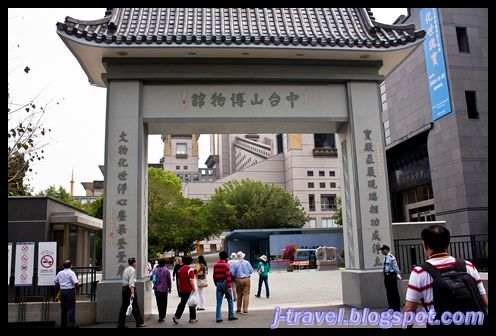
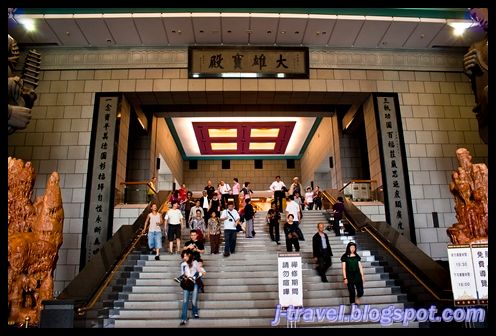
The Main entrance of Chung Tai Chan Monastery

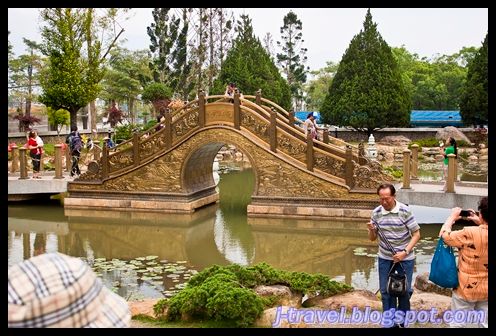
Once we stepped in, there was a Golden Bridge appeared in front of us.

The Golden Bridge

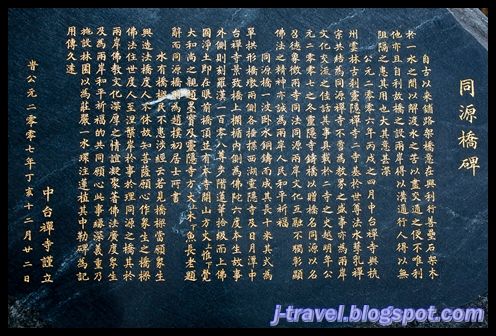
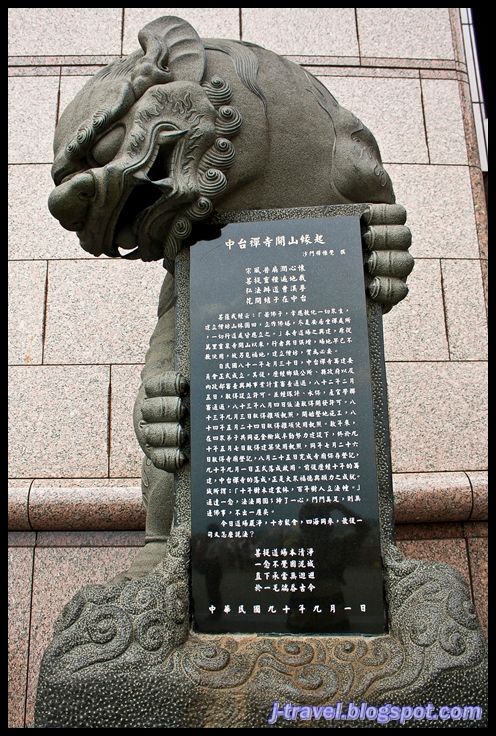
The Write up about the Golden Bridge

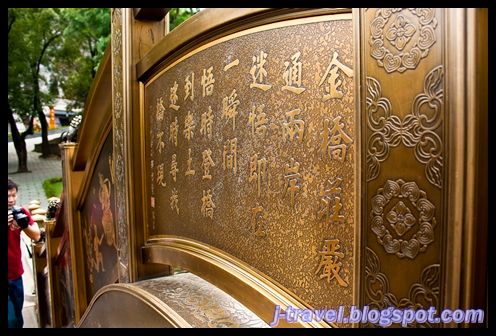
And the whole Bridge was made by brass...(some wording on the bridge)

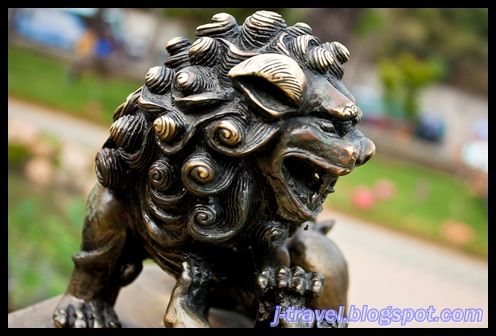
And there were many small lions on the railing of the bridge, all of them have different design...maybe they have different meaning by each of them.

The little lion on the bridge

Tourist from China Mainland

We continued to walk up the main building...there were 2 guardians on both side of the main entrance to the building. And there was a huge Buddha statue on the other side of the Chung Tai Chan Monastery.

The two Guardians at both side


Another Giant Buddha Statue opposite of the Monastery

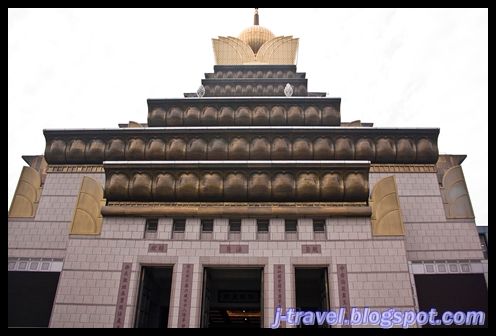
The Main entrance to the building

If you like to know more about the Chung Tai Chan Monastery, you can visit here (in Chinese). And also there was a write up below...

The write up about the Chung Tai Chan Monastery

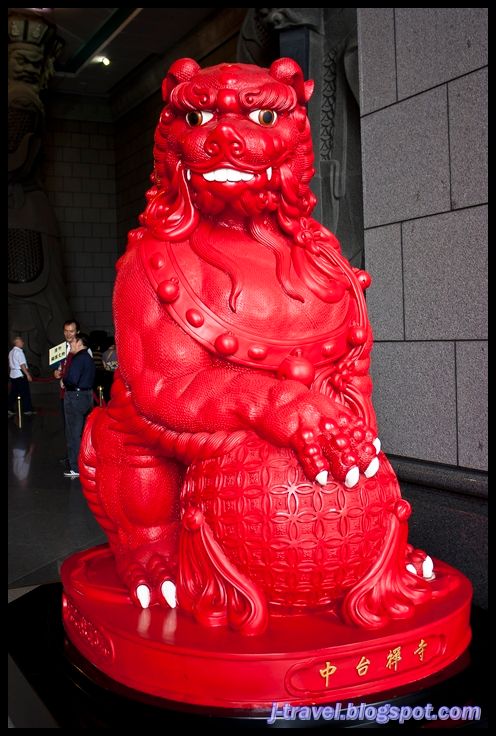
Before we step in, the was a Nice Laughing Buddha statue in the middle, and two Red lions on both side...

The Laughing Buddha

The Red Lion

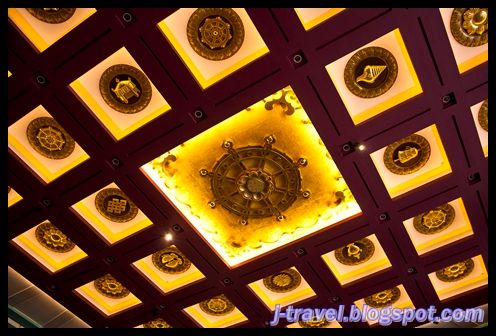
I was admiring by the unique design of the ceiling for quite some times....it was Nice!

The Unique Design of the Ceiling

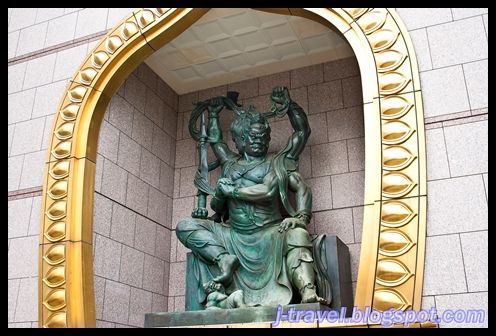
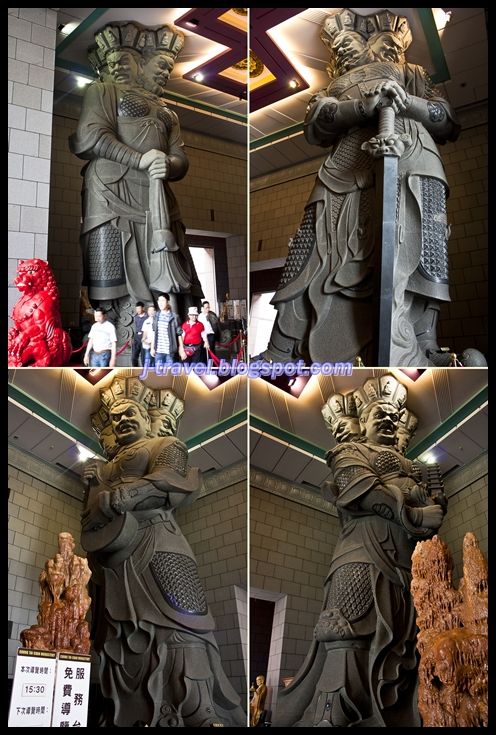
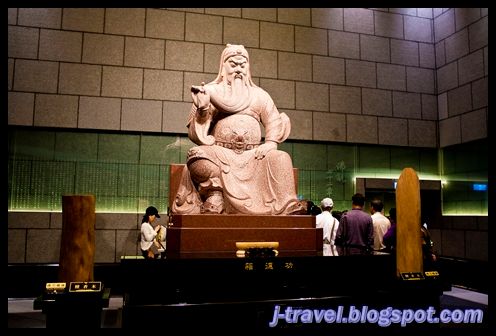
Then we noticed there were Four Huge Guardian Gods situated at the four corners, these 4 guardians named - Four Heavenly Kings (四大天王). Each of whom watches over one cardinal direction of the world. For more info about the Four Heavenly Kings, please click here. (The 4 guardians seems like also the big pillars of the hall).

Four Heavenly Kings (四大天王)


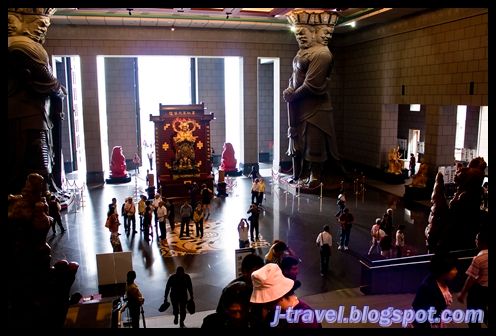
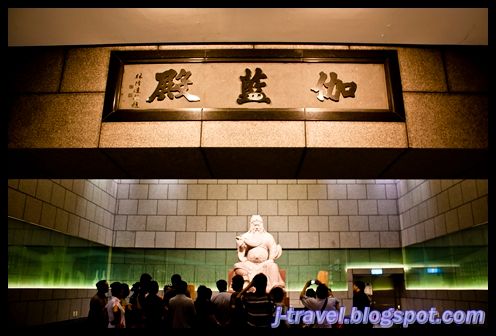
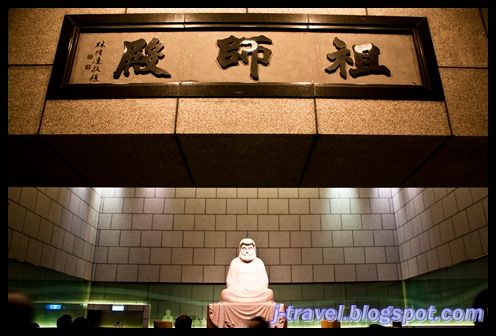
We took some times in the 1st hall and proceed to the other hall of the building...

The staircase access to another hall of the building

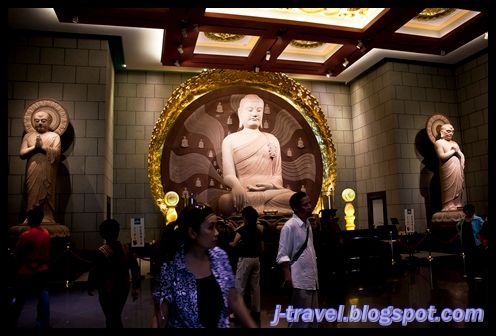
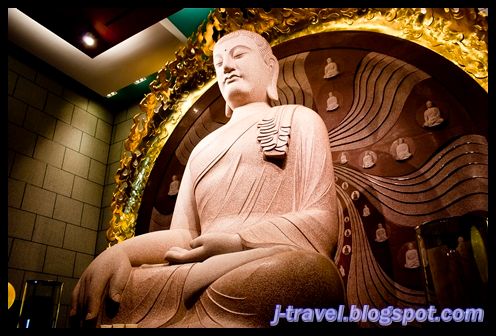
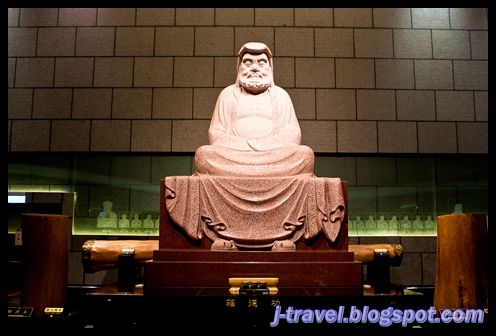
The Shih-cha-mo-ni 釋迦牟尼 (Deity) Statue spotted after the staircase...

Shih-cha-mo-ni 釋迦牟尼 statue

On the both side, there were two Deities which I'm not familiar with...

On the right...


I over heard from the Tour Guide of other tourist group who explained about the deity above is 'half human half evil'. Can you recognize which side is human?! :)

On the left...


The Monastery is So Huge that we won't be able visit every corner of it due to limited time we had...there are still many area yet to explore...hopefully we still have chance to visit in the future...

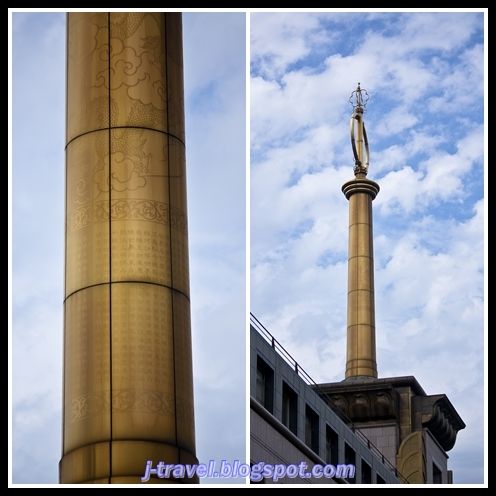
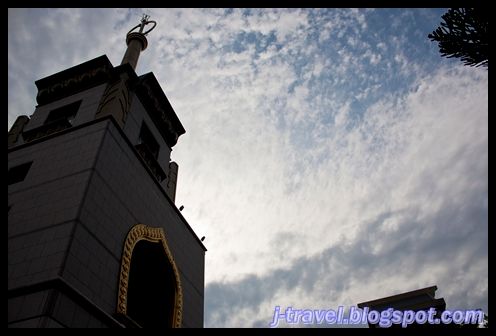
The Golden pillar on top of the building which words crafting on it.

We spend about an hour here and continued to explore our next destination which was about 30 minutes journey...


Related post :-
*  My Taiwan Trip on May, 2011

The Location Map of Chung Tai Chan Monastery at Puli Township


Thursday, June 2, 2011

Hungarian Yiddishe Mamma Mia

Yum. Photo (c) Ruth Ellen Gruber

By Ruth Ellen Gruber

I'm on the road -- this week in Poland, and last week in Budapest, where I came across (but didn't sample) this new restaurant in Gozsdu Udvar, the wonderful series of linked courtyards in the 7th District, between Kiraly and Dob streets, that was renovated recently with debatable results.....It's not clear if it's Italian Jewish (which I rather doubt), or comfort food with an attitude (which may be more like it.)

Gozsdu Udvar will be part of the scene of the Judafest festival on Sunday -- food, music, stands, etc in the old downtown Jewish quarter.

I'll miss this, as I'm heading to Krakow (from Sanok, in the far southeast tip of Poland, where I've been all week) in order to take in the "Night of the Synagogues" festival Saturday night, when all seven of the historic synagogues in the Kazimierz district will be open to the public, with lots of programming, until 2 a.m.

There's a lot to report from my trip -- but it will come in dribs and drabs... I haven't had much time (or a constant internet connection) to sort out photos and stories.


Photo (c) Ruth Ellen Gruber

Wednesday, June 1, 2011

Dreaming of Brazil


Hi there everyone,

I have been quiet for a while, busy discovering new corners of South America, and doing some work while at it... I do promise to get back here more often from now on!

Today, let’s talk about Brazil. We have heard more than enough about it on the news lately, but I get the feeling the focus has been somewhat economic. Even though it is interesting to see how world financial flows have been thrown around and today’s money makers are in fact the developing countries of yesteryear, whilst the big powers of pre-2008 are scrambling to get by, that is not what this blog is about. Brazil has become Latin America’s economic super power and that is not something that can or should be ignored. In the realm of travel it has had two interesting consequences:

First, travel to Brazil has become more expensive; the Real has revalued a lot and prices are similar to those in Europe and North America, if not, in some cases, higher. That said, we are still traveling in great numbers to the old, and the not so old, continents, which means the current price tag on tourism in Brazil is probably not going to be prohibitive to travelers. One main difference is air fare prices, which remain very expensive throughout the Latin America region, compared to similar distance long-haul flights in other parts of the world. One day I will try and investigate how this comes to be and if something could be done about it, but for now, the cost of international flights will remain the only real obstacle for people to travel to Brazil and its neighbors. I promise that when I find a cure for this, I will share it here first!

Second, Brazilians are rapidly becoming the largest visitor groups to their neighboring countries. For Argentina this is already the case, with almost 20% of all Brazilians traveling abroad heading for Buenos Aires, Iguazu and Bariloche. Also Peru is well-visited, with Machu Picchu as the most important destination. This might in the end mean that some of the entries you will see from me in the future will be written in Portuguese… J

Funny, I am sitting here in the attic of my house, winter is about to hit Buenos Aires, and I have just found out the heater up here has decided to stop working. Six degrees Celsius outside and I am thinking of Brazil… Last time I went (apart from a few stopovers) is already a while ago now, a little over a year in fact! I wrote a piece on the North of Brazil then and I remember dedicating some of it to the Feijoada dish this region is famous for. Sitting here, sipping a cup of instant soup to keep warm, I all of a sudden feel hungry, so let’s see what the Feijoada is all about again, shall we? I Googled a bit and found a good entry, which I hereby will copy, hoping the good people on about.com/homecooking as well as Mrs. Heidi Haughy Cusick (who’s book “Soul and Spice” is mentioned as the source) will be happy with my enthusiasm:

“The hearty Feijoada stew is the national dish of Brazil. It's loaded with black beans, pork, bacon, sausage, ham, and beef. Plan ahead to soak the beans overnight. This recipe takes some time to cook, but the result is well worth it.

Prep Time: 30 minutes

Cook Time: 3 hours

Total Time: 3 hours, 30 minutes

Ingredients:

· 2 cups (1 pound) black beans, rinsed and picked over

· 3/4 pound pork butt or shoulder, trimmed of fat

· 6 ounces slab bacon

· 1/2 pound smoked pork sausages

· 1/2 pound hot Portuguese sausage such as linguica

· 1 or 2 pounds ham hock or shank, cut into 1-inch rounds

· 1 large yellow onion, chopped

· 2 to 4 ounces dried beef carne seca, minced (optional; see Note)

For the Seasonings:

· 3 garlic cloves, minced and sauteed in 1 tablespoon vegetable oil

· 6 green onions, including tops, chopped

· 1 yellow onion, chopped

· Large handful of chopped fresh parsley (about 1/2 cup)

· 2 bay leaves, crumbled

· 1-1/2 tablespoons dried oregano, crushed

· Salt and ground black pepper

· Chopped fresh cilantro or parsley

Preparation:

Soak the black beans overnight in water to cover by several inches. Drain.

Place the drained black beans in a saucepan and add water to cover by 3 inches. Bring to a boil, reduce the heat to low, cover, and simmer until the beans are tender, 2 to 2-1/2 hours. Add additional water as needed to keep the beans covered.

While the black beans are cooking, prepare the meats. Preheat an oven to 375 degrees F. Dice the pork butt or shoulder and the bacon into 1/2-inch cubes. Place the pork, whole sausages, and bacon in a large baking pan. Roast until well done. The sausages will be ready after 35 to 40 minutes and the other meats after 45 to 60 minutes.

Cook the ham hock at the same time as the meats are roasting. In a saucepan, combine the ham hock rounds and onion with water to cover. Bring to a boil, reduce the heat to a simmer, and cook until tender, about 1 hour. Remove the ham hock rounds from the water and remove the meat from the bones, if desired; set aside. Or leave the rounds intact for serving alongside the black beans. Strain the cooking liquid into a bowl. Add the strained onions from the liquid to the beans. Add the cooking liquid to the beans if needed to keep them immersed.

Once the black beans are almost cooked, check to make sure there is plenty of cooking liquid in the pot. It should be rather soupy at this point. Stir in the beef (carne seca). Cut the sausages into rounds and add them and all the other cooked meats to the pot. Then add all of the seasonings to the pot, including salt and pepper to taste. Simmer for another 30 minutes, or until the beans are very tender.

Taste and adjust the seasonings. Sprinkle with chopped cilantro or parsley just before serving.”

Of course, cooking this up at home is the second best option, and will suffice only until you can make your way to Brazil in person and sit down to an authentic Brazilian feast accompanied by a cachaca or two and perhaps a little samba. Here are a few ideas for you if you plan to visit:

Salvador and the beauty of Bahia

Diamantina National Park and Salvador

OK, I am off out to buy black beans and bring a little Brazilian heat into this cold Buenos Aires day, talk to you later!

Happy trails

Bart