Friday, August 12, 2011

Slovakia - More on the Jewish Heritage Route


Ceiling, Orthodox synagogue, Trnava. Photo (c) Ruth Ellen Gruber

By Ruth Ellen Gruber

I spent the past five days following the Slovak Jewish Heritage Route -- 14 or 15 sites (out of the 24 on the Route) in all parts of Slovakia, from Bratislava to Presov and back. We stayed in top hotels but for some reason I never had a good enough internet connection to post on this blog. So here are a few highlights, with more detailed posts to come.

Synagogues -- we saw all types. Some fully restored and used for various purposes, some in use as synagogues, some under restoration.

The oldest was that in Stupava, not far from Bratislava. It was built in 1803 and is one of the oldest int he country -- one of only two built in the "Polish" nine-bay style with a four-pillar bimah supporting the vauted ceiling. The one in Stupava belongs to a private citizen, Tomas Stern, a doctor and businessman who bought it for almost literally nothing and has been restoring it as a sort of hobby (for years he documented Jewish heritage sites in Slovakia).... He will be getting married there (officiated by the Bratislava rabbi) at the end of August!


Stupava interior. Photo (c) Ruth Ellen Gruber

One of the most exciting moments for me was to see the newly restored Orthodox (or Small) synagogue in Trnava, north of Bratislava. The Status Quo synagogue (a wreck when I first saw it 20 years ago) was restored in the mid-1990s as a contemporary art gallery -- a restoration that was daring, in that it preserved vivid signs of the damage and devastation that the synagogue underwent during and after WW2. From the outside, it even still looks like a ruin.


Trnava, Status Quo Synagogue. Photo (c) Ruth Ellen Gruber

But the Orthodox synagogue across the street remained locked and abandoned; disused and in terribly neglected shape. It has recently though been acquired by a private investor, beautifully restored (also preserving signs of damage) and opened as the private Max Gallery. There is talk now of a collaboration between the two synagogue galleries -- I hope so.


Trnava Orthodox Synagogue. Photo (c) Ruth Ellen Gruber

The little country synagogue in Spisske Podhradie, located in a town beneath majestic Spis castle, has been undergoing restoration for years.... But it is nearly completed. The idea is to have a small exhibit on Jewish history there and also use it as a cultural space. The setting is unique -- The town, the castle and the splendid monastery complex (Kapitula) all form a UNESCO cultural heritage site. But the town is poor and undeveloped. So far, there is little infrastructure for visitors and the site remains well of the beaten track for mainstream tourists (though we saw Polish and German cars).


Spisske Podhradie sign for synagogue with castle in background. Photo (c) Ruth Ellen Gruber


Spisske Podhradie synagogue street facade. Photo (c) Ruth Ellen Gruber


Inside nearly restored Spisske Podhradie synagogue. Photo (c) Ruth Ellen Gruber

Click HERE for information about travel and tourism in Slovakia.

Wednesday, August 10, 2011

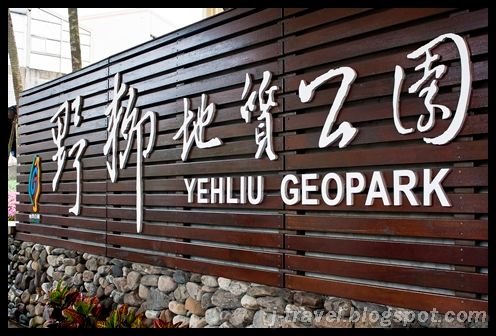
Yehliu Geopark (野柳地質公園) at Yehliu, Taiwan

This is one of the Must visit Geopark in Taiwan - Yehliu Geopark (N25.20740 E121.69102)

It's located at the cape on the north coast of Taiwan in the town of Wanli between Taipei and Keelung and the entrance fee is NT50.00, the operation hour is from 8am-5pm everyday.


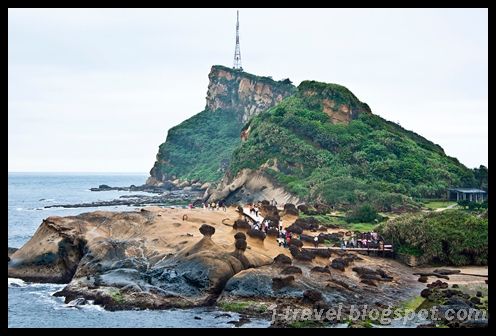
Yehliu Geopark of Taiwan


"The stratum of Yehliu is mainly composed of sedimentary rocks; the formation of sea bays is due to the impact of sea erosion on softer rock layers, while those hard and solid ones may therefore turn into sea capes eventually."


"The prospect as presented from a long distance view of Yehliu Cape is like a turtle crouching down by the sea; therefore, the cape is also called “Yehliu Turtle”. In the olden days, Yehliu was a key channel of the trade route between mainland China and Keelung harbor. Yet, the waters around the area were torrential and dangerous, and often caused serious shipwrecks. A legend was told that once a turtle elf was making trouble in the sea. A fairly was dispatched by Jade Emperor to tame the turtle elf..." Source from here.


You can read the Wikipedia site here.


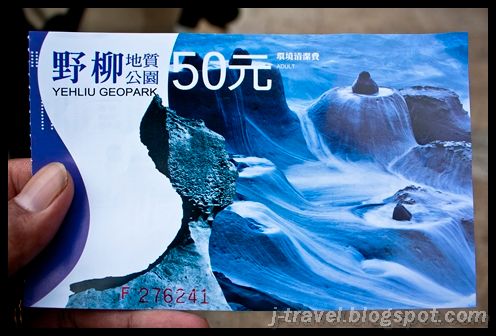
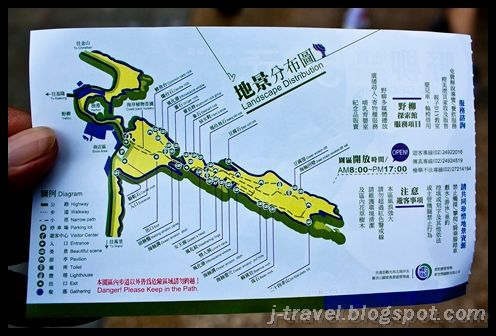
The ticket and detail rocks location behind the ticket.


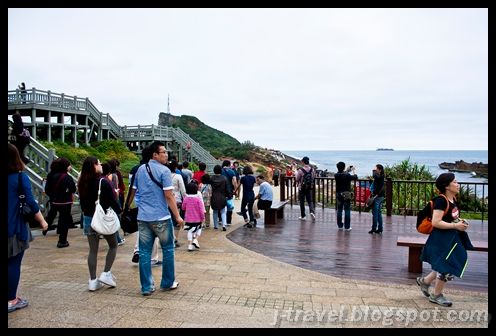
Once we got the tickets, we started the 3.5km (in and out) walked...it was a cloudy day...


The area is full tourist everyday, everyone are eager to witness the rock formation and the beauty of Yehliu Geopark.

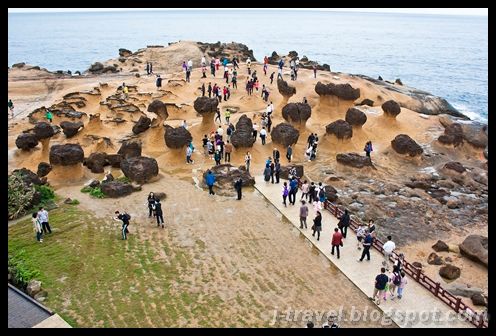
There are 2 session of the time-eroded rocks in the Geopark, both are surrounded with many rocks in different type of shapes & sizes...


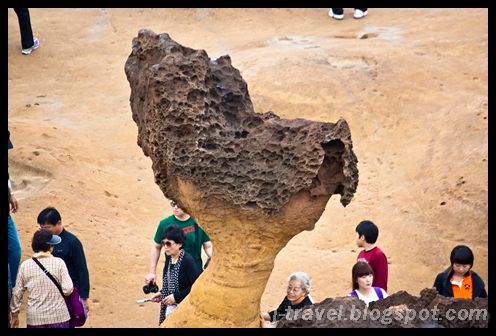
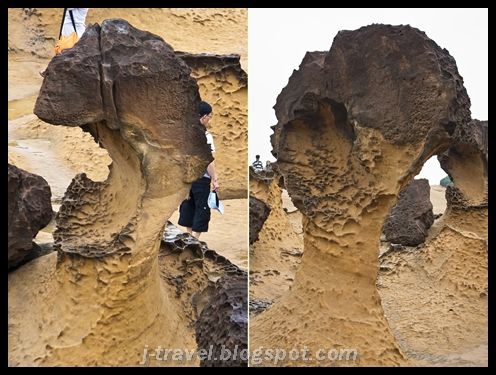
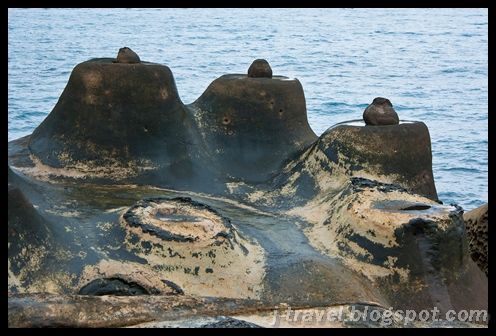
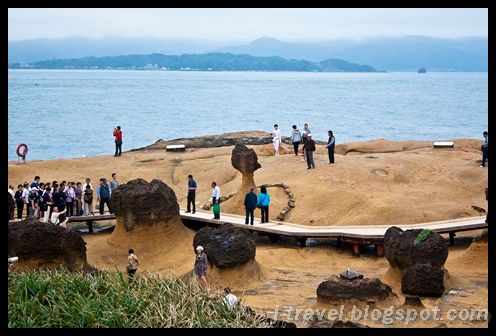
The first session...many Mushroom rock around....

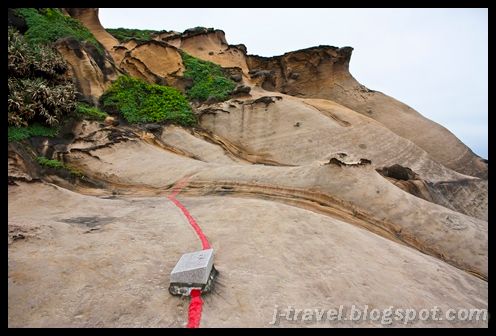
"Please don't cross the Red line!" I was curiously put one of my leg out of the line and the I heard the Security Whistle in less than 2 second! That's Fast!


The Breathtaking view from the higher platform...GREAT!


I managed to spot some rocks which name by the Taiwan Tourism...but I missed some too...


Mushroom Rocks


And I found the 'Ice-Cream'!


The Ice Scream Rocks


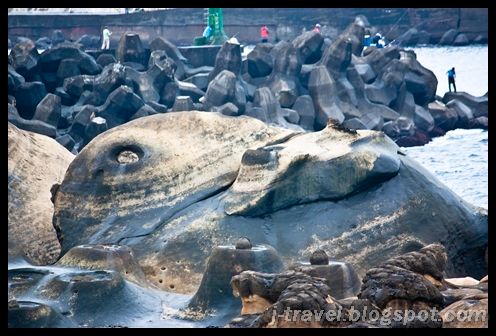
This shape look like a whale? There are 2 candle rocks in front of it...


The Candle Rocks


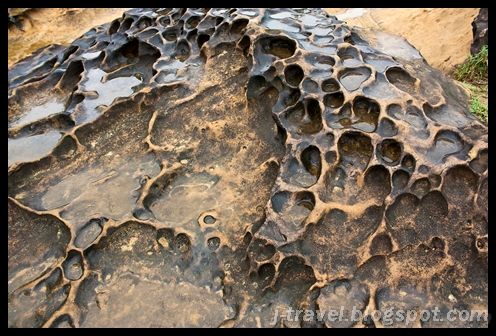
The Honeycomb Rocks


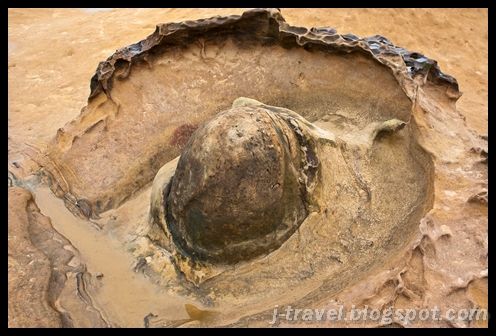
The Pearl...does it look like one?


"Yehliu is unique because the different rock formations near the seashore. It contain substantial quantities of limestone, which are subject to sea erosion, weathering and earth movements, thus making the 1,700 meter-long peninsula almost lunar-like in many ways. The wild-looking landscape leaves little to the imagination. It's easy to imagine what life could be like on another planet.net. 

The area is studded with seawater-eroded holes teeming with sea-life, as well as unusual rock formations, which make the surrounding environment rich in ecological resources. Sun, wind, rain, waves and strong northeastern typhoons all make a major impact on this narrow strip of land." Source from here.


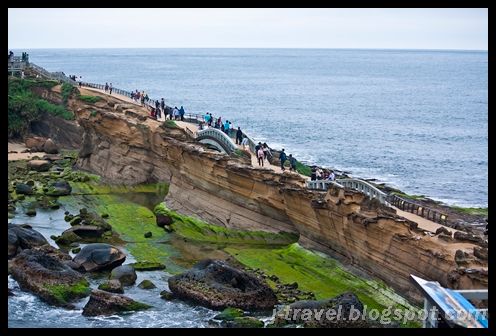
The nice and beautiful pathway of Yehliu Geopark


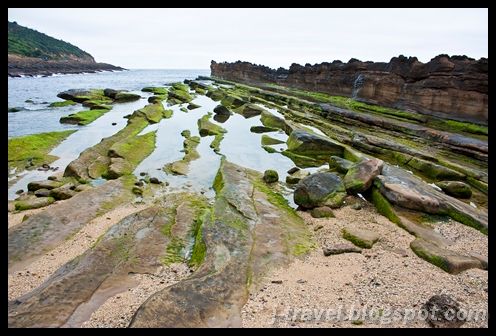
After hanging around at the 1st session of the Geopark, we proceeded to the 2nd session where the Famous 'Queen's Head' located. But the queue was terrible!


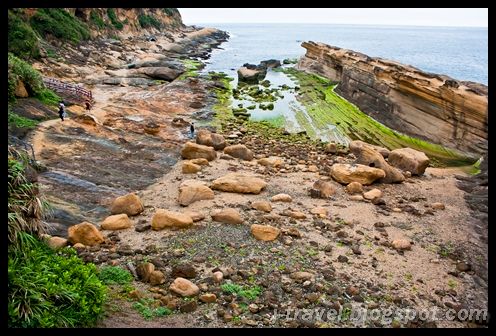
 Scenic view of the Cape


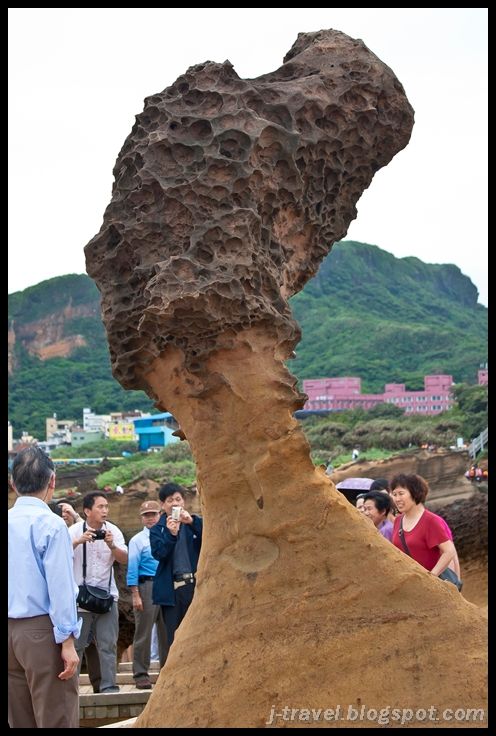
Tourists were queuing to take photo with the Queen's Head


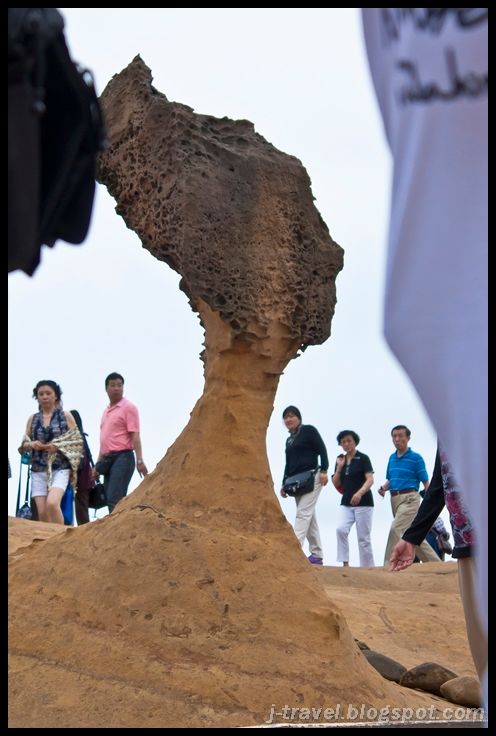
Because the rock is only look like a Queen Head from One direction...so we searching here and there trying to find a nice spot to take the photo of the Queen's Head.


From the opposite direction. Where you can see the tourists queuing behind...


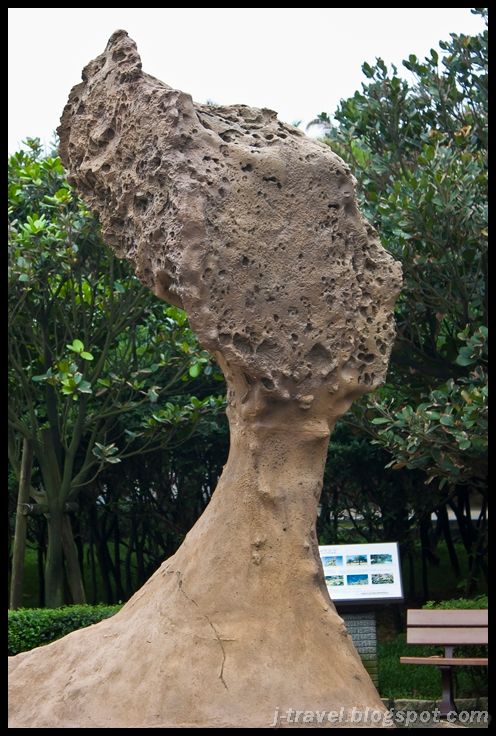
The Queen's Head at Yehliu Geopark (the correct direction)


We also found some fossil and interesting rocks around the second session...


The Fossil spotted at the second session.


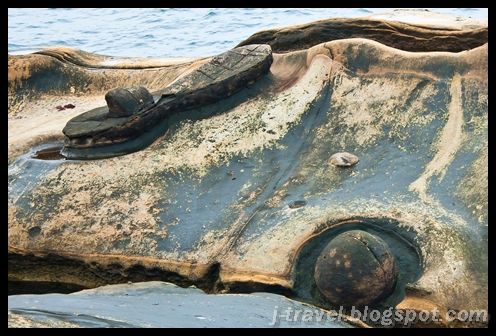
The Fairy's shoe, it's look like a sandal to me...


The formation rocks at Yehliu :-

*  Honeycomb Rock, Honeycomb weathering

*  Mushroom Rock

*  Ginger Rock

*  Candle shaped Rock

*  Bean Curd Rock

*  Mini Taiwan Rock

*  Queen's Head

*  Fairy's shoe (sandal)

*  Marine Bird Rock

*  Ice Cream Rock

*  Elephant Rock

*  Peanut Rock

*  Pearl Rock

*  Little Turtle Rock

*  Japanese Geisha Rock

*  Fried Drumstick

*  24-filial piety hill

*  Lover Cave

*  Dragon Head Rock

and many many more.....


We had not enough time to search for all the rocks stated behind our ticket, and we also didn't hike the small hill at the cape...

We left the Geopark after more than an hour walked, and we spotted this actual size Replica Queen's Head and the garden area. I believe the purpose is to let the tourist see the Queen's Head without walked on the 1.7KM long pathway., and also in case raining during visiting the Geopark.


The actual size Replica Queen's Head


I took many photos at the Yehliu Geopark, too bad I can't post all into this blog post. I will definitely visit the Yehliu Geopark again in my next visit to Taiwan, hopefully it will be a sunshine day!


After this Beautiful Geopark, we continue our journey to Jiufen...


Related post :-
*  My Taiwan Trip on May, 2011


Location map of Yehliu Geopark at Yehliu, Taiwan


Monday, August 8, 2011

South America Road-trip in an old-timer


Part 1 – Peru to Ecuador in a 1968 Volvo Amazon

I really, really, really like driving through South America. This is one of my favorite things to do. Lately, since we have children now and my life has changed somewhat, this does not happen as much as I would like, but every now and then I get to hit the road again. Last December I got lucky, a good friend of mine, Johan van Rijswijck, asked me if I would like to come on a trip with him to scout out part of a rally he was planning. Johan owns Sapapana Travel, a Dutch tour operator specializing in Latin America. We often work together, however, on this particular rally we had decided not to (Class Adventure Travel have a large Dakar Rally event at roughly the same time), but of course I was more than happy to help out and be Johan’s co-driver on the journey from Lima to Cartagena.

The trip was supposed to take place at the end of September, but during the previous stretch (Buenos Aires-Lima) Johan and his other co-driver had had a streak of bad luck ending in a blown-up engine some 300 miles before arriving in the City of Kings. Both he and I had to fly back home (I was already waiting for him in Lima) as repairing the engine of his 1968 Volvo Amazon was going to take quite some time. Parts are not really available in Latin America these days and most had to come from Germany and Sweden. Luckily there is a Volvo Club in Lima and its then president, Karl Spihlman, himself a totalVolvo aficionado, was of enormous help and rebuilt the engine from scratch. At the beginning of December we both flew back to Lima to begin our journey.

After picking up the car, we left on Saturday morning 9am, 11 December. We had 850km to go and that meant a full day’s driving. It is a little bit of a hassle to leave Lima to the north, and probably due to the upcoming elections, road-works were in progress virtually everywhere. It took us three hours to get out of the city and it wasn’t until noon that we were really able to get moving…

The new engine also meant that we had to take it easy for the first 1,000 km: 80kph max. While the almost perfectly asphalted open roads really invited us to drive faster. But there was no way around it - we weren’t going to break the engine again - so we settled for a nice long drive in the Peruvian sun. The coastal desert road we were following sometimes gave way to stunning views of the Pacific Ocean and other times took us over impressive sand dunes. We were already driving in the dark before we reached Trujillo, but we weren’t at our destination yet. The driving was good, but after Trujillo we entered a more populated area so the traffic increased and made it difficult to push on through to Chiclayo, our planned destination for that day. We finally arrived past midnight, found our hotel, checked in and hit the sack immediately. We had a 9am start the next day.

Sunday started like a breeze, we had Chiclayo behind us and were back on the Pan-American Highway in no time. The road was in perfect condition, but we still couldn’t drive over 80kph and could only change the oil and filters after a minimum of 1,000km. Still, we managed to reach Piura in the early afternoon, picked up some snacks for the road, filled the tank and found a garage to change the oil, before hitting the road again. We decided to push the engine a little and see how fast we could go, so we made some good mileage. We left the coast behind us and drove northeast. Slowly but surely the landscape changed; the desert morphed into more tropical surroundings and we even passed some rice-fields. Around 4pm we reached the Ecuadorian border. It was a great setting, a river meandering down from the mountains, crossed by an old bridge, bordered on one side by a large gate saying ‘Peru’ and on the other by a huge sign indicating one was entering Ecuador. Formalities on the Peruvian side only took 15 minutes and it seemed we would have a similarly easy entry into Ecuador, but that turned out a little bit differently. The customs officers were as charmed by the old automobile as everyone we had passed along the way and the stamps in our passports were arranged within minutes. Only when we tried to check in the car it turned out that there was only one officer that was allowed to give clearance, and the said gentleman was out for lunch with his girlfriend in a village nearby… So, there was nothing to do but wait and we started up a conversation with an Argentine couple from Mendoza on their way to Caracas (Why not? Nice drive!). Luckily it only took half an hour for the officer to return to his post and formalities here turned out to actually be as easy as on the other side; after 15 minutes we were back on track.

In Ecuador the road led us directly into the mountains. Beautiful scenery, but the quality of the road surface was a lot less than what we had gotten used to in Peru. Luckily there were so many signs (sometimes up to three identical signs in the same place) that it was hard to miss the direction to the town of Loja. We were lucky to have filled up our tank in Piura as most gas stations in this part of Ecuador were closed as it was Sunday. Due to the road conditions and many curves we moved a lot slower on this stretch. Initially we expected to arrive in Loja around 7pm, but quickly had to reset our ETA to 9pm. After 6pm the sun was gone, which reminded us how close we were to the equator. This meant extra careful driving, especially when we suddenly entered an area of very dense fog. We could see around 2-3 meters ahead of us if we were lucky, sometimes we simply had to feel if our tires hit the sides of the road, so you can imagine we took our time to get through this area. We had just about moved our ETA to midnight when the mist disappeared just as suddenly as it had appeared, the clouds lifted from the mountain and we were driving on, eventually reaching Loja at 8.30pm. Loja is situated at an altitude of 2100masl, which gives the town a very nice climate. Never extremely hot or cold and situated in a beautiful green setting surrounded by nature, Loja promises some great outings for a future trip to Ecuador. Upon arrival in the hotel we ordered some food and of course a couple of beers, but this turned out to be impossible. Recently a law was passed in Ecuador prohibiting the consumption of alcohol on Sunday afternoons after 4pm (which reminds me I need to write a piece on seriously funny laws in Latin America; have seen a couple in Peru lately that caught my eye…). Our Colombian waiter tried to explain this to us, but when he saw the disbelief in our faces he was friendly enough to make an exception, so we could enjoy a nice illegal beer before turning in.

Monday consisted of a relatively short drive to Cuenca, some 200km from Loja, and departing on time we made it there by lunch time. Cuenca is worth a visit, with its beautifully preserved colonial city center and amazing cathedral. It is generally regarded as Ecuador’s most beautiful city. It took us just 3.5 hours driving over a perfectly asphalted road through the mountains, climbing to 3500masl before descending into the adjacent valley. A nicely curved road through a green, mountainous landscape made this a short, but attractive driving day.

To be continued...

Sunday, August 7, 2011

Slovakia -- Following the Slovak Jewish Heritage Route


Brooding sky over Bratislava's main square. Photo (c) Ruth Ellen Gruber

By Ruth Ellen Gruber

I arrived in Bratislava today, to spend the coming week going around the country on the Slovak Route of Jewish Heritage -- a  project  devised by my friend Maros Borsky, the leading expert on Jewish heritage in Slovakia. The author of the book Synagogue Architecture in Slovakia, Maros founded and directs the Slovak Jewish Heritage Center.

 I have been following the evolution of the Jewish Heritage Route from its very beginning. The Route now includes about 24 sites in all parts of Slovakia -- mainly synagogues and Jewish cemeteries. Each uses a common logo and each has a uniform plaque affixed to it, and each involves a partnership with a local body, such as a municipality, or a school, or local Jewish community, or another organization -- that, as a stakeholder, will work to make sure that the site is maintained and also used for educational purposes.

I have visited most of the sites in the past (and reported on some of them in this blog as well as in Jewish Heritage Travel and other writings).

Today we saw the modernist synagogue on Heydukova street, the only functioning synagogue to survive in the city. It was built in the 1920s for the Orthodox community and designed by Artur Szalatnai-Slatinský. It is a rather stark building, with seven pillars marking the street facade. The interior has some cubist elements and very interesting interior detail, including distinctive hanging lamps and a grille around the bimah that recalls gothic construction.


Photo (c) Ruth Ellen Gruber

Maros showed us the work being done in the women's section, where next year an exhibition of Bratislava Jewry will be installed.

We briefly visited the Museum of Jewish Culture, a branch of the Slovak National Museum that reopened in 2009 following the revamping of its original exhibition, which dated from 1993. Although I wish this institution well, I have to say that today's visit did nothing to dispel the disappointment I felt when I was here about a year ago.  The objects are arranged with little information about their history, provenance or significance. See my post from last September by clicking HERE.

Click HERE for information about travel and tourism in Slovakia.
Friday, August 5, 2011

Poland -- Museum of the History of Polish Jewry

By Ruth Ellen Gruber

During the Jewish Culture Festival in Krakow last month, I spoke with Barbara Kirshenblatt Gimblett, who heads the team developing the core exhibit of the Museum of the History of Polish Jewry. The Q and A was published in The Forward.
The museum has gone through some rough patches in recent months, with the departure, under pressure, of its director, Jerzy Halbersztadt, and financial shortfalls. What can you say about the status of the institution?
First of all, one of the great strengths of the institution is that it does not depend on one person. And that is a tribute to the former director. This museum has the good fortune to have a very, very good team. And the team has rallied and is functioning in a very positive way. So I’m optimistic….

Financially, we struggle. But we have donors, led by Sigmund Rolat and Tad Taube, that have been with us and supported us for many years.

What have been the main challenges? Are you satisfied with the process and result so far?

Although I first started coming to Poland in 1981, it was not until I began working on this project that I began to realize what it means to tell the story of how Polish Jews lived — and not only how they died — here, in the very place where they created such a vibrant civilization. That story has been overshadowed, understandably, by the Holocaust.… What began as a challenge — there is no collection of objects that could support such a compelling story — turned out to be an extraordinary opportunity and lesson, so to speak, in how to bring history to life using every possible medium.

How close is the exhibition to being installed?

Our goal is to open April 2013. When he visited the museum in May, President Obama promised to bring his daughters to the opening — and we’ll hold him to it!

Read more: http://forward.com/articles/140845/#ixzz1U8jKIST1

Wednesday, August 3, 2011

Wang Hai Tin Seafood Restaurant (望海亭海鲜餐馆) at Yeh Liu (野柳), Taiwan

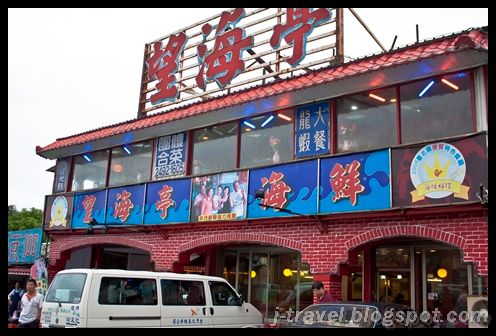
After about an hour+ drove from Taipei, we reached Yeh Liu (野柳). Well, our purpose was to visit the Famous Yeh Liu Geopark. But before that, we had our lunch in this Wang Hai Tin Seafood Restaurant (望海亭海鲜餐馆) (N25.20421 E121.69038) which is not far away from the Geopark.

Wang Hai Tin Seafood Restaurant at Yeh Liu

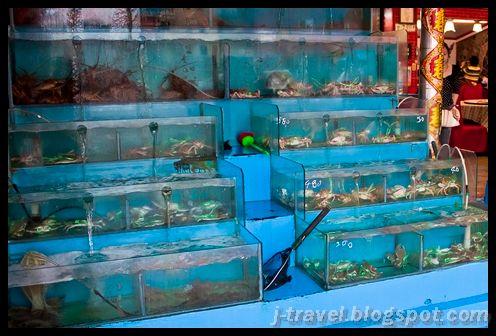
Live seafood...

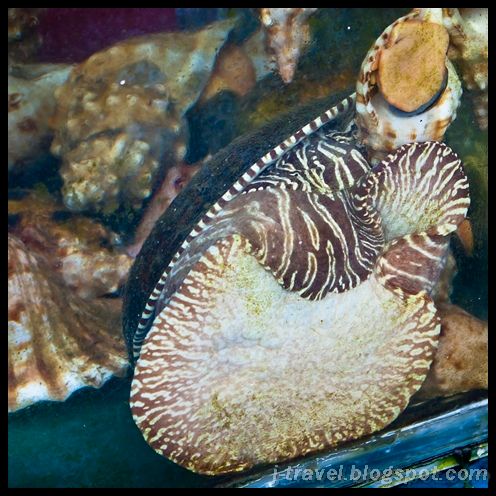
I was attracted by some 'Giant' around the corner...

Giant crab!

Giant sea snail, big?

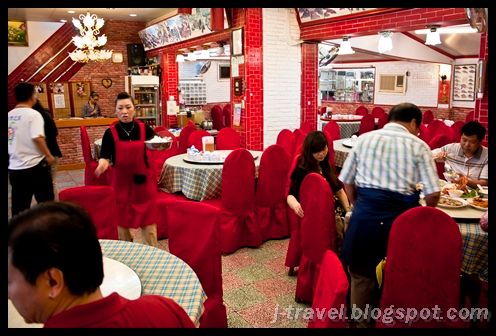
Our seafood lunch had been pre-arrange and once we stepped in, the restaurant started to prepare our meals...

The internal decoration of Wang Hai Tin Seafood Restaurant. Clean!

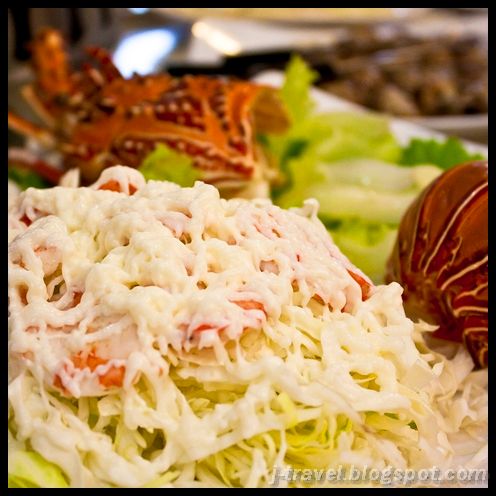
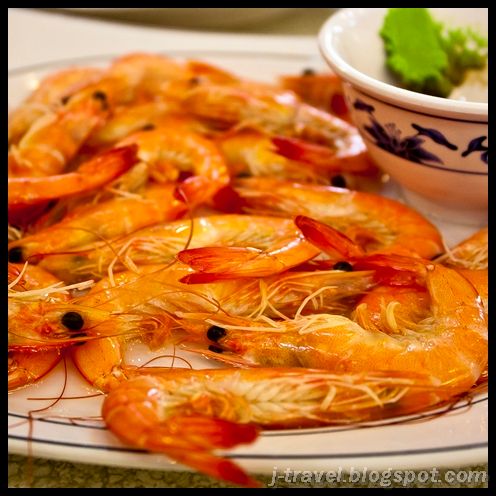
Ok, these were what we had...

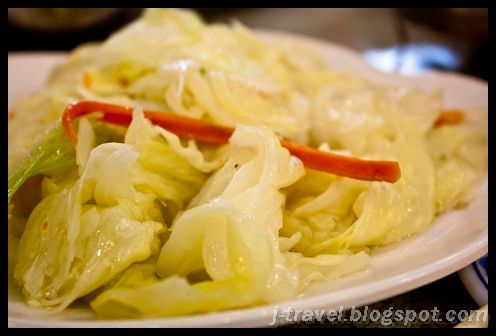
Cabbage

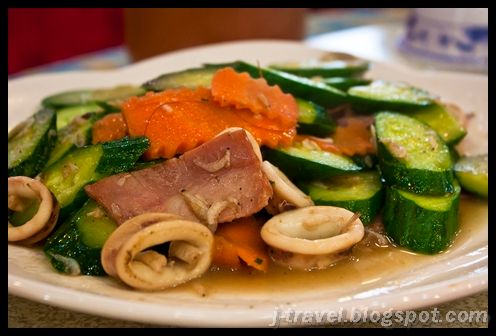
Cucumber and squids

Sea snails

Steam prawns with Wasabi (ワサビ(山葵)

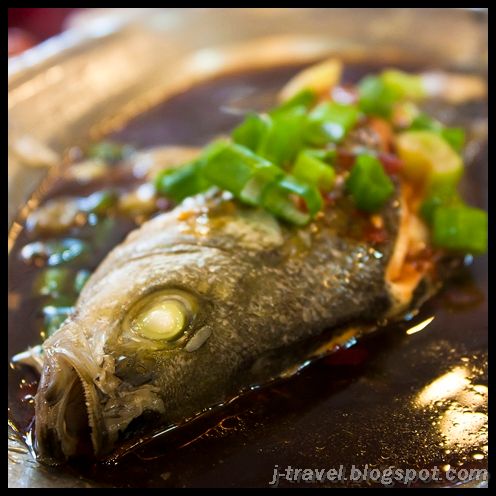
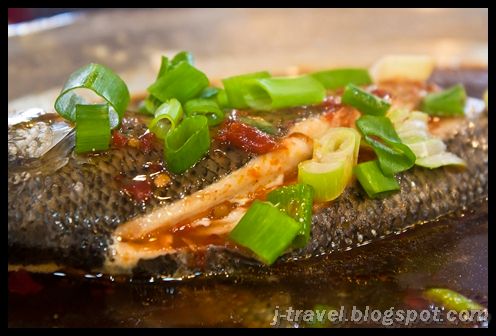
Steam Fish. It was Fresh!


Lobster


Overall, the foods were Fantastic! I like almost every dishes on the table. Especially the fish, sea snails and the steam prawn with Wasabi (First time tasted). We really enjoy our lunch and we took almost 2 hours to finished it. :)

As I noticed the price tag on the tank outside the restaurant, seems like the prices of the seafoods here are very reasonable and affordable!

Verdict : 4.5/5 (overall)

Do drop by the restaurant if you are happen to be around.

Related post :-
*  My Taiwan Trip on May, 2011

The Location map of Wang Hai Tin Seafood Restaurant at Yeh Liu, Taiwan


Monday, August 1, 2011

Hungary -- Bankito turns to civic action


By Ruth Ellen Gruber

The annual Bankito alternative/youth Jewish culture festival on Bank lake north of Budapest takes place this week. And this year, besides music and arts, the program includes a big dose of social and civic activism -- in particular a program called "Volunticipate" forging links between Jewish and Roma (Gypsy) youth groups to help promote volunteerism and  minority pride and fight prejudice. And there are a number of workshops and discussion groups on topics relating to Jewish identity, studies, etc.