Monday, October 26, 2009

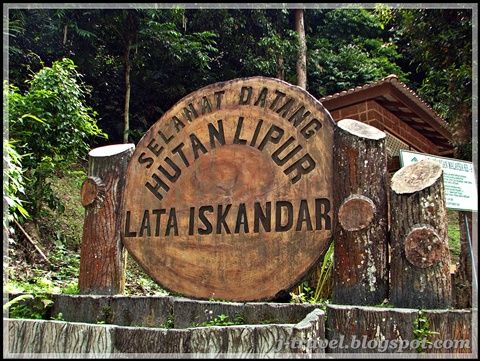
Iskandar Waterfall at Cameron Highlands (September 2009)

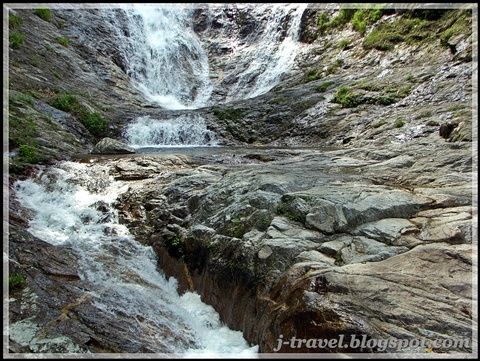
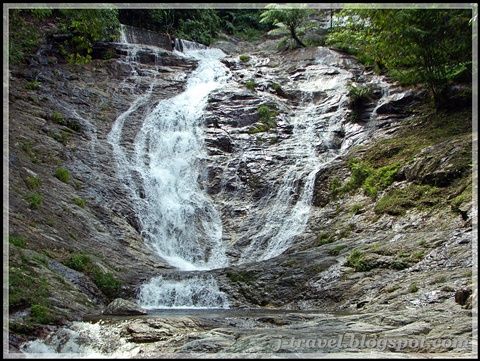
We passed by this Iskandar Waterfall (Lata Iskandar in Malay) (N4 19.483 E101 19.477) while leaving Cameron Highlands on our Day 3. I just wanna find out are there any different from my last visit on 2003.

The park was clean and there was nice walkway from the main road towards the waterfall.

I was intend to climb up to the upper fall, but unfortunately, our time was not allow...too bad :(

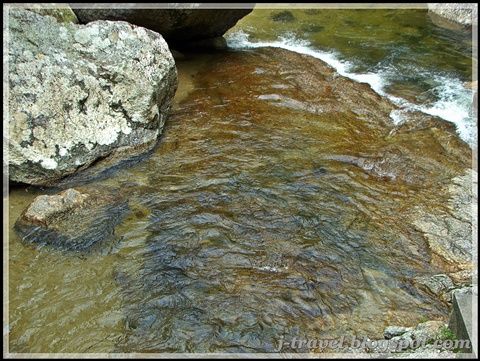
The water was clear as usual...you can view it from the pictures below...

The Main Fall


The Upper Fall

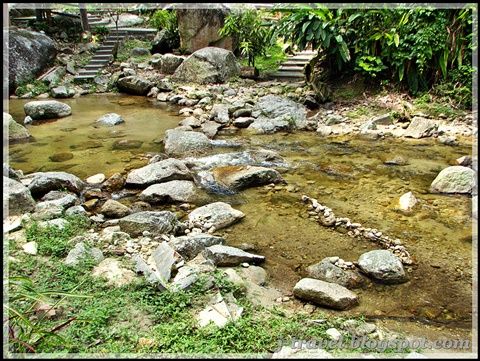
The Crystal clear water...


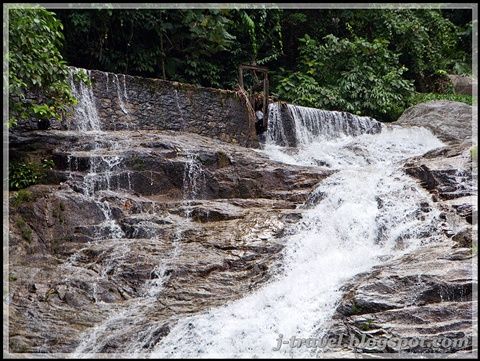
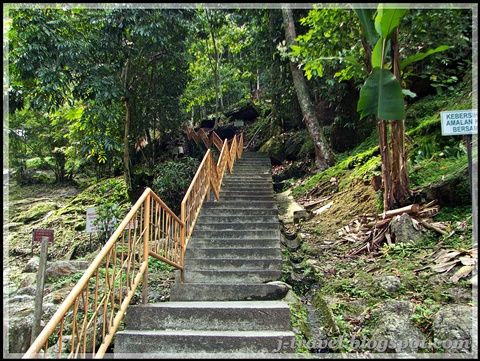
The staircase to climb up to the upper fall...

Stairway to heaven...

Opposite the fall, there are few souvenir shop and the wash room also located between the shops. The wash room was well maintain and clean! You have to pay MYR0.20 for using it.

The souvenir shop opposite of the fall

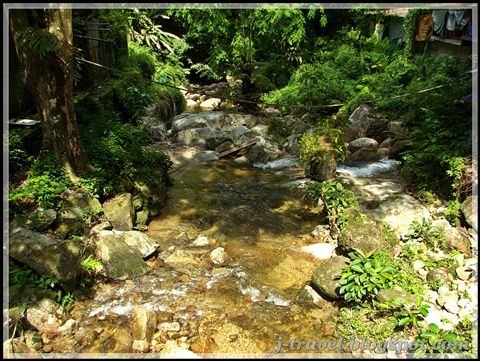
The stream after the bridge of the main road, clear water...

I will plan to stay more longer on my next visit, at least...I wanna climb to the upper fall! :)


View Larger Map

My Cameron Highlands Trip - 2003
* Cameron Highland in 2003, Pahang

My Cameron Highlands Trip - September 2009
* Rosa Passadena Hotel at Brinchang, Cameron Highlands (D1)


MY TRIPS - Home

Poland -- Article on Jewish Cemetery in Lodz


 Poznanski tomb, Lodz, under restoration in 2006. Photo (c) Ruth Ellen Gruber

There's a nice article (by DPA) on the large Jewish Cemetery in Lodz -- though it incorrectly states that the cemetery is the largest Jewish cemetery in Europe. The much older Jewish cemetery in Warsaw and, certainly Budapest's vast Kozma utca Jewish cemetery, have more burials and also more varied styles of tombstones and mauslea. The Jewish Cemetery in Lodz does have a very informative web site with a map and pictures and links to an expanding data base that so far includes the names of 90,000 people buried in the cemetery.


 Map of the cemetery, Lodz. Photo (c) Ruth Ellen Gruber


Tombstone showing traces of painting. Photo (c) Ruth Ellen Gruber

Here's part of the DPA story:
Lodz, Poland - Lodz' Jewish cemetery is an impressive sight, with its long avenues, old trees, mausoleums that look like ancient temples and thousands of headstones. Some are badly weathered and it is impossible to read the inscriptions on many. Graves are covered in ivy and most of them date back to before the Second World War.[...]
The Jewish cemetery has some stunning examples of opulent graves built by a middle class who were prepared to spend almost as much money on mausoleums as they did on houses for the living.

In his day, Izrael Poznanski, for example, was the most well known Jewish factory owner in the city and accrued a fortune from textile manufacturing. He lies buried with his wife Leonia in a mausoleum that cost a fortune to build.[...]
There are many other fine examples of ostentatious graves in the cemetery. The tomb of the Prussak family is a domed roof supported by four columns with four steps. Many of the tombs were built in the art nouveau style, such as that for the Rapppaport family.
The parents of the classical pianist Artur Rubinstein are also buried in the cemetery. Their comparatively simple gravestone survived the war along with thousands of other ordinary headstones. The headstones are usually made of sandstone or limestone and are often decorated with a Star of David or a hand in blessing. The image of a book indicates the headstone marks the grave of a learned person.


Read full article here


Lodz Jewish Cemetery. Photo (c) Ruth Ellen Gruber

Sunday, October 25, 2009

Poland -- Good News (Maybe) about Przysucha synagogue


 Synagogue in Przysucha, 2006. Photo (c) Ruth Ellen Gruber

By Ruth Ellen Gruber

The Foundation for the Preservation of Jewish Heritage in Poland (FODZ) reports that progress seems to be being made regarding the restoration and preservation of the imposing, 18th century synagogue building the Przysucha. The FODZ web site reports that a meeting will be held tomorrow about the synagogue's fate.
On October 26th, 2009 in Przysucha representatives of the Foundation for the Preservation of Jewish Heritage in Poland will meet with representatives of the local NGO’s: Oskar Kolberg Cultural Society and Music Education Society as well as the Oskar Kolberg Museum in Przysucha. The meeting will be dedicated to the concept of the historical synagogue’s development.
Przysucha was a major center of Hasidism in Poland -- Martin Buber mentione d seven Tzaddikim from the town. It was the seat of the influential Hasidic masters Abraham of Przysucha (d. 1806) and Jacob Yitzhak ben Asher (1766-1813), known in lore simply as the Holy Jew of Przysucha, who is credited with being the first propagator of Hasidism in Central Poland.  Jacob Yitzhak's disciple Simcha Bunem (1784-1827) also lived here. Their tombs in the Jewish cemetery, which is near the synagogue, are places of pilgrimage.

Przysucha was founded in 1910 as a settlement of German ironworkers. Jews lived here from the beginning, and by 1921 made up two-thirds of the population of 3,200.

The synagogue is one of the largest of Poland's surviving synagogues. It was heavily damaged in World War II when the Germans used it as a warehouse.  It conserves traces of structural and decorative detail, including the central bimah, the women's gallery, a few faded frescoes and much of the Aron ha Kodesh, with stucco work above it. Attached to the outside wall is a rare example of a kune, or pillory, where Jews sentenced by the Jewish community court would be locked in punishment.


The Kune. Photo (c) Ruth Ellen Gruber.

FODZ, which took possession of the badly deteriorated building two years ago, has a web page dedicated to the synagogue and efforts to revitalize it. On the page you can see architectural drawings and other material.


In 2008, we carried out essential protective renovations, but the building still needs urgent repairs. The roof is in a very bad condition and the interior is rapidly deteriorating due to excess moisture. Currently we are working on the construction and conservation documentation. Once it is completed, we will be able to apply for funding necessary to start the restoration and adaptation works.

The synagogue in Przysucha (yid. Parshishe vel Przishe) was built between 1774 and 1777. With an area of nearly 600m², it is a massive limestone building towering over a small town (current population: 6800). The main prayer chamber is rectangular, with a vaulted ceiling descending in the middle towards a four-piered structure formerly framing the bima (reader’s podium). The aron ha-kodesh, framed by a portal topped with stucco griffins, has also been preserved. Some polychromies remain on the walls.


  Photo (c) Ruth Ellen Gruber, 2006
Hillview Inn at Tanah Rata, Cameron Highlands

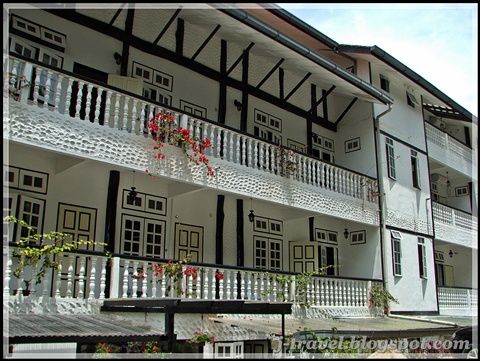
Hillview Inn (N4°28.111' E101°22.516') is located at the Tanah Rata town of Cameron Highlands. This New budget hotel was just opened!

Hillview Inn of Cameron Highlands

I was attract by this nice looking hotel while pass by Tanah Rata town. So we decided have a look of the hotel. The reception guy was really friendly to provide the room rates information and even bring us along to view the room! I'm impressed!

We had to take our shoes to go to the first floor, hmm...more hygiene?! Then he asked one of the boy to open the rooms door one by one...

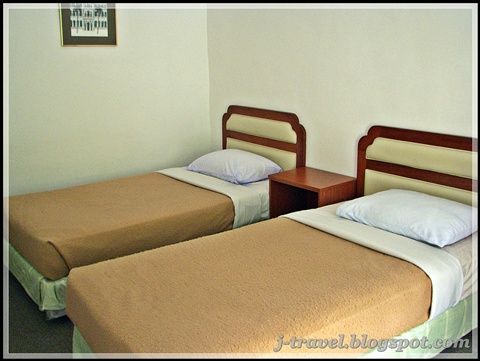
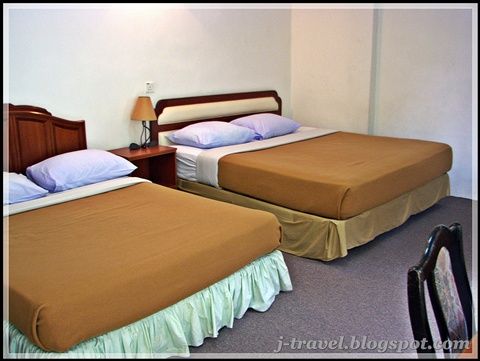
The standard room for 2 persons, 2 single bed

The standard room for 2 persons, 1 queen bed

Family room for 4 persons, 1 King bed and 1 Queen bed

There is a small and comfort living hall for first and second floor. (Photo as below)

Living hall of every floor

Every room have their windows and balcony. The only different from others hotel is...there is no TV in the room, you can just go to the living hall to watch your favorite program if you want to...
It's a nice place to stay, especially it's clean! The hotel location is convenience because of the restaurants and shops just a few step away...
We might stay here in our next visit to Cameron Highlands...:)

Room rate :-
* Double room from MYR25.00
* Double room with bathroom attached from MYR35.00 to MYR80.00
* Triple & Family room from MYR45.00 to MYR120.00
* Special rates for long stay

The family room rate is MYR200.00 for weekend, MYR220.00 for public holiday.

Hillview Inn (Cameron Highlands)
17, Jalan Mentigi,
39000 Tanah Rata,
Cameron Highlands,
Pahang.
Tel : +605-4912915 Fax : +605-4915212


View Larger Map


MY TRIPS - Home

Saturday, October 24, 2009

Poland -- Kielce Shabbaton

Michael Traison, who organized the Shabbaton last weekend in the Polish city of Kielce, has passed on some reaction to the event, which brought Jewish religious services to the century-old synagogue in the city for the first time since World War II The synagogue was totally rebuilt after the war and has served as the district archive since 1951. Fotos of the event have been posted of the very comprehensive Shabbaton Web Site.

This is what one participant wrote:
From childhood I used to listen to my parents descriptions of the Kielce synagogue. This synagogue was the symbol and pride of the Jewish community of Kielce. It was like Jerusalem for the Jews in Kielce and their center of life. It appeared on every document, book, letterhead related to Jewish Kielce. It was the community icon. Whenever I told somebody that I visited the synagogue they asked me whether the wonderful ceiling paintings are still there.  

I am not a religious person, I don't know to pray and if I went to synagogue it was mainly during my and my sons bar mitzvah when I also "went up to the Tora" - keeping the Jewish tradition. I never had a dream to pray at any specific place, or at all, neither in the Kielce synagogue but apparently when it happened it became another bar Mitzvah for me.

When I was 13 years old I went up to the Tora in our local synagogue surrounded by all my family members and friends. Being a good musician, I learned to sing the Brachot, Aftara and Maftir as a real Hazan. I remember very well the excitement and how my parents were proud. This was almost 50 years ago.

Last weekend I was standing there in the Kielce synagogue during the praying, once again surrounded with many friends, Jews and non Jews among them the chief Rabbi of Poland. I slowly started to feel excited and realized that I am celebrating a second bar mitzvah but this time without the presence of my family members. Then instead of looking into the Sidur, I started to think of each and every one of my family members who lived in Kielce and prayed in this same place and slowly slowly I started to feel their presence. And when Rabbi Schudrich invited me to the Tora, instead of saying the Brachot I suddenly started to sing them at exactly the same melody which I was singing when I was 13 years old and which I never repeated since then. I felt that I came to Kielce to celebrate my Bar Mitzva once again after 49 years, this time with my grandparents, great grandmother uncles, cousins and other family members that lived in Kielce and could not attend my first 13 years bar mitzvah. I hope that they have been proud of my singing as were my parents when I was 13 years old.


Thursday, October 22, 2009

Ukraine -- Big Turnout at Berdichev

The Federation of Jewish Communities in the CIS reports that there was a record turnout this month to mark the 200th anniversary of the death of Rabbi Levi Yitzhak, an early Hasidic Master who spent the last 25 years of his life in Berdichev (or Berdychiv, in Ukrainian).

Born around 1740, he was a disciple of the tzaddiks Shmuel Shmelke of Nikolsburg (Mikulov, Czech Republic) and the Maggid of Mezhirech.  Levi Yitzhak was one of several charismatic rabbis who made their home in Berdychev. He believed in the innate goodness of human beings, and his optimism and good cheer imbued his teachings. In particular, he believed that people could serve God in their daily actions as well as through prayer, and even prayed and wrote in Yiddish so that ordinary Jews could understand his words.

Berdichev is legendary in Jewish life and lore. Jews settled here in the early 18th century, and the town developed into an archetypical shtetl, and great Yiddish writers set stories there or used it as models for fictional towns. In 1897, its more than 41,000 Jews made up 80 percent of the town. There were said to be at least 80 synagogues and prayer rooms, but the town was also a hotbed of the Socialist Labor Bund.

Rabbi Levi Yitzhak's tomb in the large Jewish cemetery is a place of pilgrimage. Protected by a newly refurbished ohel as big as a small house, it stands surrounded by thousands of tombstones. The cemetery has undergone clean-up work -- but when I visited in 2006, it was very overgrown.


 Berdichev Jewish cemetery 2006. Photo (c) Ruth Ellen Gruber

Inside, his grave is covered by a simple slab, flanked by racks to hold candles.


Photo (c) Ruth Ellen Gruber, 2006


Here's what the web site of the Federation of Jewish Communities said about the commemorations:
The activities were overseen by Chief Rabbi of Berdichev Moshe Taller, who is also a Chabad-Lubavitch emissary serving in the region. The local Jewish community carried out the necessary preparations thanks to the financial support of Mr. Aaron Meiberg, who made this contribution to honor his parents’ memory.

One of the special projects commemorating the 200-year anniversary was the publishing of a booklet with excerpts from Rabbi Levi Yitzchak’s teachings as well as a book of Psalms with commentary by Rabbi Levi Yitzchak.
The number of visitors to Rabbi Levi Yitzchak’s gravesite on or around the yartzeit was more numerous than usual. For their convenience, the Jewish Community Center organized a hospitality center at the cemetery, where visitors were able to get kosher food, have use of restrooms and special water containers for the ritual washing of hands after visiting a grave were also made available. Additional lights were also installed at the cemetery for those people coming at night. The police provided for the visitors’ safety, while the city government arranged a pedestrian crossing for the visitors in front of the cemetery.

On Tuesday, 25 Tishrei (October 13 this year) everyone was welcome to participate in a special meal in the central courtyard of the city’s synagogue. Many rabbis and public figures attended the meal, including Mikhail Yudanin, a board member of the World Congress of Russian Jewry, who is a friend of the Jewish community of Berdichev. Mr. Yudanin received an honorary certificate in appreciation for his support of the Jewish community’s growth and development.

Mayor of Berdichev Vasiliy Mazur, who actively contributed to the reception’s organization, greeted the visitors. He noted that Berdichev owes its world-famous name to the Jewish people (in the past, the city was considered the unofficial Jewish capital of the Russian empire), and expressed his hopes that Jewish life in the city will continue to undergo a revival.


 Read Full Article

Wednesday, October 21, 2009

Ukraine - Synagogue in Khmelnitsky restored, reopened

The synagogue in the Ukrainian town of Khmelnitsky has been renovated and reopened for religious use.

The Federation of Jewish Communities of the CIS reports that it reopened for the High Holidays and was filled to capacity.
The synagogue is the only one in the city to have survived the Soviet era, through during that time it was neglected and became utterly rundown. While superficial renovations were carried out following the collapse of the USSR, it soon became clear that the entire building needing a complete overhaul.
Read full article