By Ruth Ellen Gruber
Vandals have damaged or toppled about 10 gravestones in the centuries-old Jewish cemetery in Puklice, near Jihlava. The cemetery is listed as a national cultural monument and had recently undergone restoration. Police are investigating the vandalism, which was discovered in the first week of January.
The Puklice cemetery, which includes about 100 gravestones, is one of the oldest in the Czech Republic, probably founded in the 15th century. The oldest legible gravestone dates from 1699. The small Jewish quarter in the village itself is largely intact, with the remains of a mikvah and a former synagogue/school (now a residence).
Jaroslav Klenovsky, who oversees Jewish heritage in Moravia for the Federation of Jewish communities, told Czech media that the vandalism was likely not a specifically anti-semitic attack, but the work of "young offenders."
You can see a video of the damage HERE.
Tuesday, January 17, 2012

Friday, January 13, 2012
Made Cafe & Bagus Cafe at Jimbaran Bay, Bali.
After the disappointed sunset at Tanah Lot Temple, we proceed to Jimbaran Bay for dinner. This time we decided to try another cafe/restaurant other than LIA Cafe. The duration took us about 30-45 minutes from Tanah Lot Temple to Jimbaran Bay.
We chose the Made Cafe & Bagus Cafe (S8.78052 E115.16482) which was recommended by our drivers.
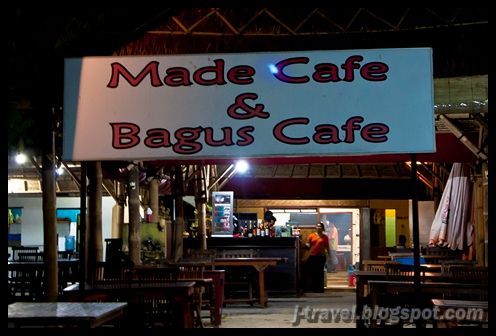
The foods served on our table about 20 minutes, well...it was fast enough!
At first, the chili and the dark sauce were served on table...then following by the vegetables...
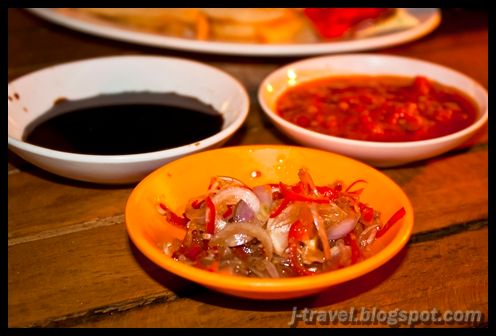
The chili and the sauce...

The vegetables
Then follow by all the seafoods...
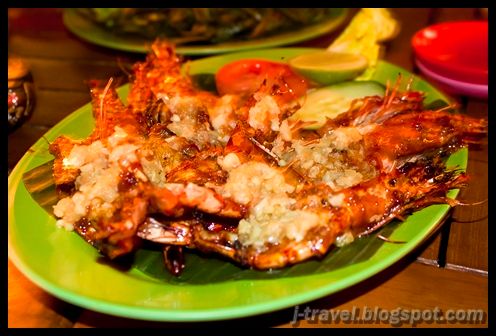
Balinese baked prawns

Squids

Clams

Balinese baked lobsters
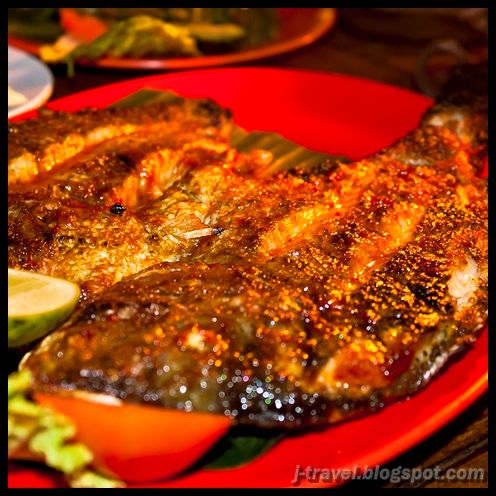
Balinese baked fish
Every dishes served double...
All dishes were Delicious!! I like the baked fish very much! The lobsters were a bit dry but still Nice! We like the Balinese taste and my daughter had a lot of the prawns...all of the dishes went well with the Bintang Beer!
This is one of the recommended Seafood Restaurant at Jimbaran Bay!
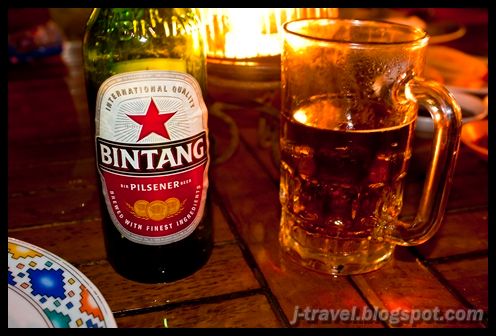
The Bintang beer
The Damage : around IDR800,000 (about MYR285) for 7 adults and 1 child included drinks. That was reasonable!
We took more than 2 hours to enjoy our meals together with the sea breeze...sometimes it's fun to watching the planes take off and landing at the Ngurah Rai International Airport at the other end...
If you visit Jimbaran Bay for seafood dinner, I will recommend you to try this cafe! You won't regret. :)
After the dinner, we said bye-bye to Bali on the next day...Bali, I'll see you again!

Made Cafe & Bagus Cafe at Jimbaran Bay, Bali
Related post :-
* My Bali trip on June 2011
* My Bali trip on June 2010
Location map of Made Cafe & Bagus Cafe at Jimbaran Bay, Bali
Ukraine -- Shtetl trippin'
By Ruth Ellen Gruber
The JTA's young correspondent Alex Weisler, who just finished a 6-month stint roving in Europe, has written a pair of stories about his whirlwind visit to his ancestral shtetl, Shatsk, in Ukraine, as well as on Jewish heritage travel in Ukraine in general -- from the perspective of a non-Jewish guide, Alex Dunai.
For me and my family, Shatsk has always seemed like an impossibly exotic travel destination. I found it hard to believe that, as the Ukrainian census informed me, about 6,000 people lived there. Or that it had a nightclub called Sinatra and several ATMs.
But somehow, you can drive to Shatsk -- and you don't even need a souped-up DeLorean. After just four hours on roads whose quality varied from poor to middling to dear-God-is-this-a-road, my mother, our guide and I had traded the comparatively cosmopolitan Lviv -- which was feverishly preparing for the 2012 European soccer championship -- for the dusty roads of Shatsk, which lay dormant in the absence of summer's rush of tourists. [...]
For 22 years, I had wondered what Shatsk meant for me. Was it a living, breathing place? Or just the graveyard of my family's past? Was it some hell my family had escaped from? Or the bucolic paradise they spent decades in America pining after?
I'm aware of the challenges that come with heritage tourism. I spent 36 hours in Shatsk. Who is to say I've learned anything substantive about a place to which I parachute in, hunt around for some information and snap a few photos? How can I be sure that my newfound connection to Ukraine and my long-lost relatives is something more than fetishizing the past and longing for an idealized Shatsk that may have never existed?
But if heritage tourism is an imperfect science, it's an important one. As a Jew in New York, it's easy to lose sight of history -- to view the past as a neat arc that started at Ellis Island, paused on a stoop in Brooklyn and triumphantly culminated in the green pastures of Westchester County or Long Island. If we consider the Old Country at all, it’s of a sanitized variety: Pop "Fiddler on the Roof" in the DVD player, rinse and repeat.
It reminds me of the article I wrote for UPI many years ago when I first visited my own ancestral town on my father's side, Radauti.
 |
| My first visit to Radauti, at the grave of my great-grandmother |
And of the various other such stories I've written for other publications, including a JTA story on a more recent visit to Radauti. Here's the of the story I wrote for JTA about visiting Kalvarija, my ancestral town on my mother's side....
December 16, 1999
Ten Years After the Wall
Memories of lost family are conjured when walking in footsteps of the past
By Ruth E. Gruber
On a frosty November morning, I walked around the two massive, ruined synagogues that form a unique surviving Jewish complex in Kalvarija, a small, sleepy town in southern Lithuania near the border with Poland.
One of the synagogues was built in the early 18th century. Its roof had fallen in and its bottom windows were bricked up, but it was possible to see arches and other architectural detail and decoration.
The other, built in about 1803, was more or less intact, but crumbling. Between the two stood a red brick building, a former rabbi's house and a cheder, or Jewish school, with a big Star of David above the door.
As I have done in hundreds of other cities, towns and villages in more than a dozen countries, I took pictures of the synagogues from every angle.
With my eye focused through my camera, I didn't watch where I was walking. Suddenly, I tripped over a broken brick, half buried in the uneven yard, and went crashing to the ground.
Trying to save my cameras, I ended up twisting my ankle so that I could hardly walk.
The injury took weeks to heal fully, but everyone told me that my spill was beshert -- fated -- and maybe it was.
Kalvarija is the town from which my great-grandfather, Pesach Susnitsky, emigrated some 120 years ago, ending up in the small town of Brenham, Texas.
In Brenham, Pesach became Philip. He was the patriarch of a huge family of children, including my grandmother, who was born in Brenham, and a pious pillar of the Jewish community.
In Brenham, he helped found a Jewish congregation. The little wooden synagogue that was built in 1894 still stands.
When he left Kalvarija in about 1880, Jews made up more than 80 percent of the town's population. By 1939, it had dropped to about 25 percent, but still about 1,000 Jews lived in the town.
No Jews live there today, and I must say that given the depressing and bloody history of the town and region during World Wars I and II, and decades of later Soviet domination, I am enormously thankful that my great-grandfather had the courage to leave when he did.
Still, the buildings I was photographing were not just fascinating sites of Jewish heritage in general: they were the places where my ancestors worshiped and studied.
The streets of the town, with their small, mainly low wooden houses, and the central square dominated by a big, white church with two ornate towers, were the streets and square where my ancestors walked.
I had driven there with a friend after spending the night near the Polish town of Suwalki, about 20 miles to the south. Until a few years ago, such a day trip from Poland to Kalvarija would have been difficult if not impossible.
For one thing, American citizens today do not need a visa to enter Lithuania. While Kalvarija is the first town in Lithuania across the border from Poland, the border crossing-point was opened only four years ago.
I didn't have a real genealogical agenda for my visit -- I just wanted to see the town. But I had hoped to spend much of the day walking through the quiet streets, poking into corners and possibly talking to local people.
My injured ankle cramped my capabilities, though -- and here's where beshert comes in.
An old woman told us where the Jewish cemetery was located, on the other side of the little Sheshupa River that winds through the town, and my friend and I decided to drive straight there.
Pesach Susnitsky died in Texas in 1939 at the age of 83. Several years ago, I visited his grave in the Jewish cemetery in Brenham.
I had little hope of finding any Susnitsky graves in Kalvarija, but I was eager to visit the cemetery just to see it.
We found a small, fenced-in, triangular plot of ground right in front of a huge electric grid, which contained several dozen simple tombstones, some of them toppled.
Hobbling, I starting photographing the site. Just then an old man came by, wheeling a bicycle.
"I know everything, everything," he smiled. All his teeth were capped in gold. "I remember everything how it was."
He propped up his bike and began to talk. He described how the cemetery used to extend much, much further, stone after stone, all the way down to the river, but the Germans destroyed it, and most remaining stones were stolen.
Now on top of the area, there are ugly, poor barracks where people live -- with no indoor plumbing, they have to walk 50 yards or so to toilets. Pigs and dogs frolic around. A man passed by leading a cow.
Of the remaining graves, the only mausoleum, he said, was that of a certain Menashe who was a "millionaire."
I asked the old man if he remembered the Susnitsky family -- and he did.
"Of course! There were a lot of Susnitskys here, a lot." Particularly, he said, before the war, there were two Susnitsky brothers in town, Alter and Yankel, who must have been nephews or great-nephews of Pesach. "Alter was a big, tall man," he said. "Yankel was small, curved over and had a hunch back." He demonstrated, scooping out his own body.
The brothers lived together in a big house on a hill, he said -- and then he led us there to see it. Indeed, it was one of the most imposing wooden houses in the village. Undergoing some renovation, it even sported a satellite dish.
Both brothers were killed when the Germans deported the Jews to nearby Mariampole during World War II, he told us.
The old man said all the houses on this street were occupied by Jews, and that Jews lived all over the town. "So many, so many!" He gestured forlornly.
He was clearly nostalgic for past times -- and the disappearance of the Jewish community represented for him a change for the worse. Nonetheless, in describing the Jews in town, he used the Polish term Zydek or "little Jew" -- a term Jews regard as pejorative.
The Jews in Kalvarija were "good people," and "wealthy," the man said, they took care of each other and everyone got on with everyone.
"They were called Yankele, Alterke, Menashe, Meyshke," he recalled. "They would say, 'Oy vey, oy vey.'"
Tuesday, January 10, 2012
Sunset of the Tanah Lot Temple, Bali
Visited the Tanah Lot Temple (S8.62073 E115.08705) again in our 2011 Bali's Trip. This is one of my Favorite places in Bali Island. The purpose of this visit was purely for photography, yeah...I'm trying to catch the spectacular sunset of Tanah Lot Temple...
You can view my last blog post about Tanah Lot Temple here.
 But that seems like not a good weather for sunset, it was Cloudy...

Let me share some of the photos of Tanah Lot Temple...


This time I tried to explore more...went to another cape...Scenic view! Breathtaking!


This was the dangerous area! No railing at both side till the end of the path! Beware! But it was the Beautiful area for photography...

 After I spend about 2 hours enjoying the breathtaking view, a deep breath and end my photography session...
There were still crowded during I walked back...


Well, I couldn't snap a nice sunset photo of Tanah Lot Temple this time, guess I still need to come back again! :)

Related post :-
* My Bali trip on June 2011
* My Bali trip on June 2010
You can view my last blog post about Tanah Lot Temple here.
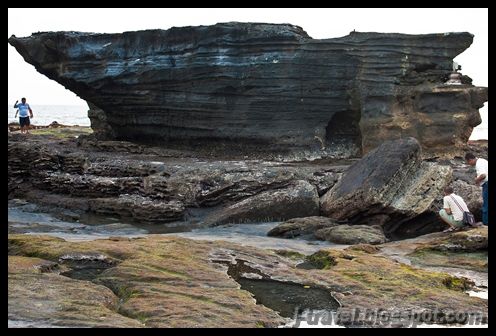

Cloudy at Tanah Lot Temple, Bali
Let me share some of the photos of Tanah Lot Temple...

Tourists are queuing for the Temple Holy Water...
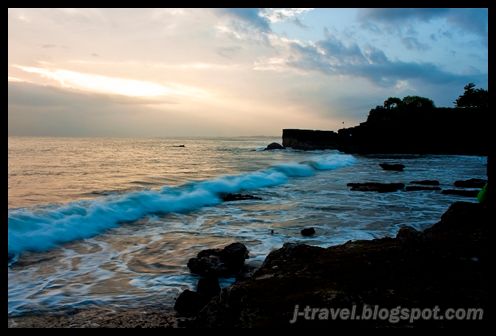
Pura Tanah Lot, Bali
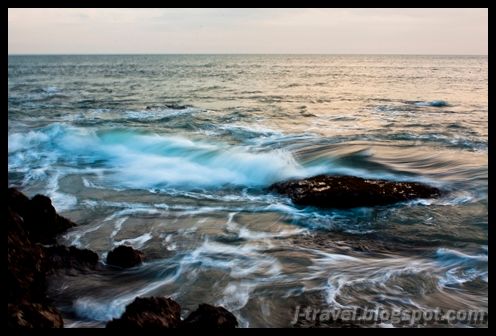
The wave...
This time I tried to explore more...went to another cape...Scenic view! Breathtaking!
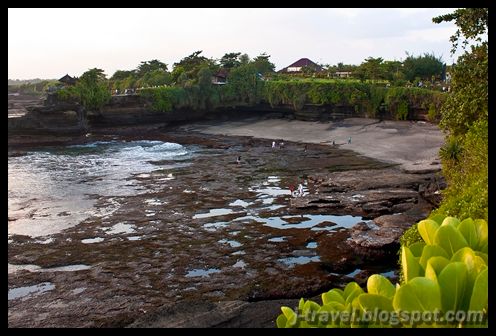
The path to another cape at Tanah Lot Temple area
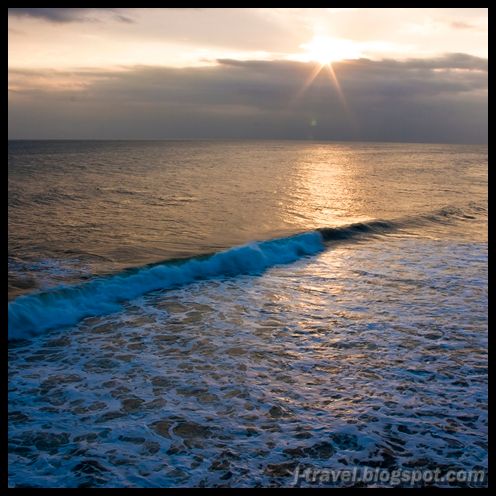
Nice view but too bad it was cloudy...
This was the dangerous area! No railing at both side till the end of the path! Beware! But it was the Beautiful area for photography...
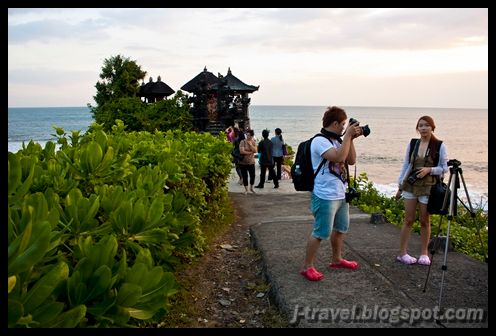
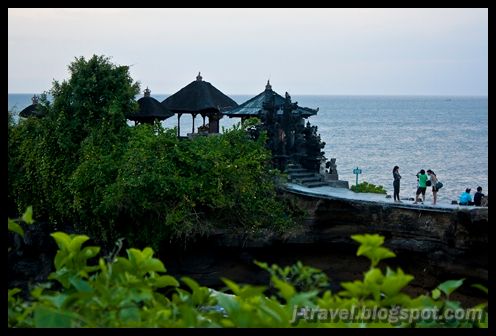
There were still crowded during I walked back...
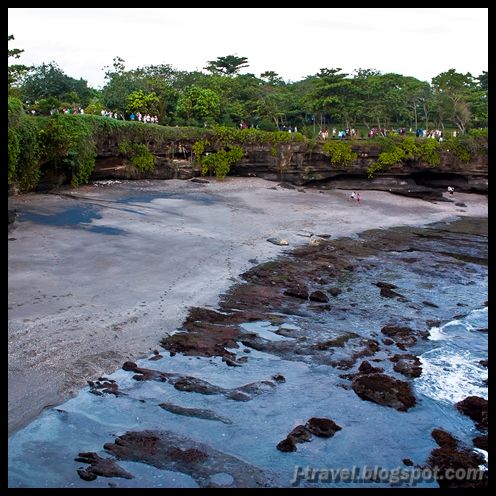
Many tourists still around...
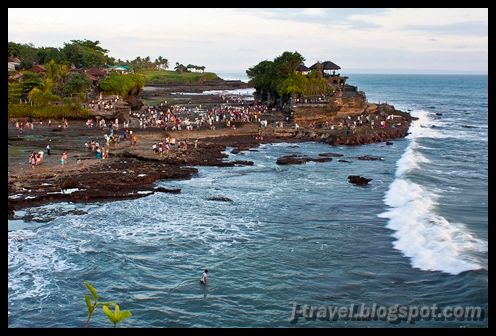
The different view of Pura Tanah Lot, Bali
Well, I couldn't snap a nice sunset photo of Tanah Lot Temple this time, guess I still need to come back again! :)
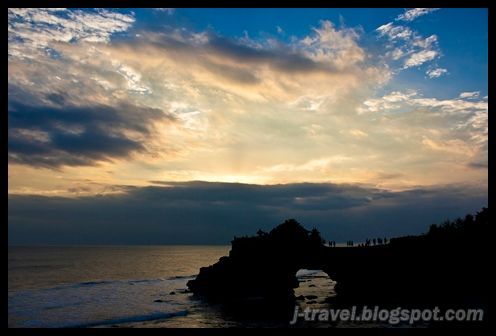
Sunset of Tanah Lot Temple
Related post :-
* My Bali trip on June 2011
* My Bali trip on June 2010
Location map of Tanah Lot Temple at Bali.
Saturday, January 7, 2012
Bali Sorgawi Hotel at Kuta, Bali
After about 1 hour and 30 minutes travel from Ubud, we reached the Bali Sorgawi Hotel (S8.71066 E115.17131) at Kuta. We chose this hotel was because of it situated in the heart of Kuta town, shopping area is just a stone throw away...and there are many restaurants, cafes and night life happening here. But the main reason was it's nearby the Bali's Airport.

After the narrow alley (above) along Jalan Legian at Kuta, the Bali Sorgawi Hotel appear in front of us! Our check-in was smooth and we had a short rest in the hotel...


The swimming pool was just next to it...


The cafe area also around the swimming pool area, it had a great view of the pool...

I like the Balinese design very much!
After glance through the hotel surrounding, we proceed to our room which was at the first floor. Really impressed by the 'Clean and shining' corridor...!


Our room was the last at 1st floor...yes! It was number '205'.
Every room has 2 wooden chair and a small table outside the room, it was the nice place where I had my 'Bintang' beer during night time! :)

We took the Family room with bed configuration of 1 queen bed and 1 single bed, package included simple breakfast to 3 persons, Nice fried noodle! (mee goreng). It cost USD60 (about MYR188.00) per day. Well, it was a reasonable price and the room was Spacious!
The booking was simple enough by just sent an enquiry via email to the hotel, no deposit is required. They even have airport transfer if you does not engage a driver. If you pay by credit card, 3% extra will impose in the hotel bill.
Let me show you the room...


The bathroom is equipped with a bathtub...

 The room was really spacious enough for 3 persons, and the room also provided the 'international travel adapter' for every visitor from the World, that was Great!
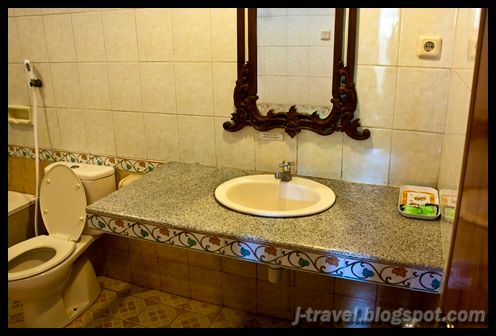
We were satisfied with it except...the 'Unbearable stain' in the bathtub and the 'rusty' wash basin sink! And I can't find any glass in the room! Weird?!
The staffs here were not quite freindly (hardly to see their smile)...to my experience. Because they don't provide Hot water to the room, when I call to the room service...they asked me to get it myself at the cafe area. Maybe...it's the hotel policy!
Anyway, we were OK for A night stay here, I had to say it again...it was really convenient because of the location.

Related post :-
* My Bali trip on June 2011
* My Bali trip on June 2010
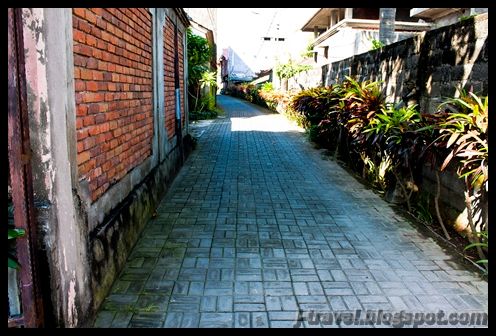
The alley to Bali Sorgawi Hotel
After the narrow alley (above) along Jalan Legian at Kuta, the Bali Sorgawi Hotel appear in front of us! Our check-in was smooth and we had a short rest in the hotel...
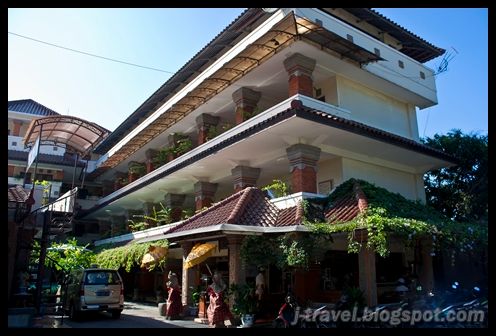
Bali Sorgawi Hotel at Kuta, Bali.
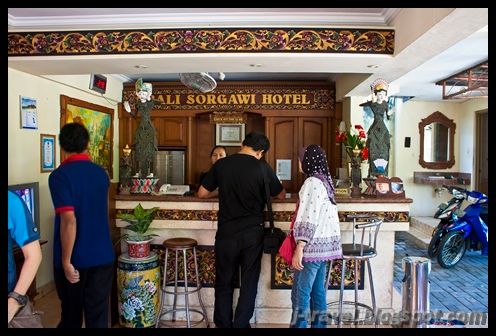
The Reception counter at Lobby of Bali Sorgawi Hotel

The Business Center was just located opposite the Hotel lobby
The swimming pool was just next to it...
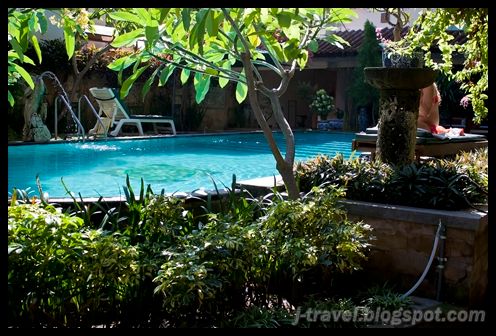
The swimming pool just next to the Business Center

Crystal clear water and well maintain...
The cafe area also around the swimming pool area, it had a great view of the pool...
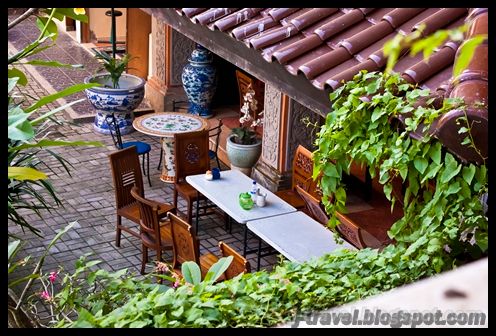
The cafe and restaurant area of Bali Sorgawi Hotel
I like the Balinese design very much!
After glance through the hotel surrounding, we proceed to our room which was at the first floor. Really impressed by the 'Clean and shining' corridor...!
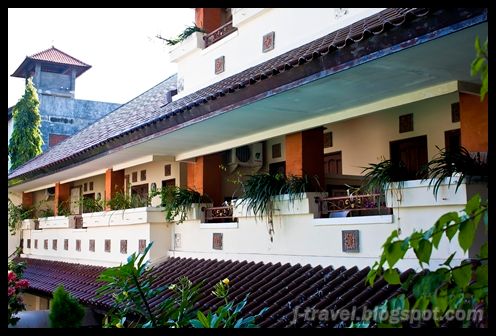
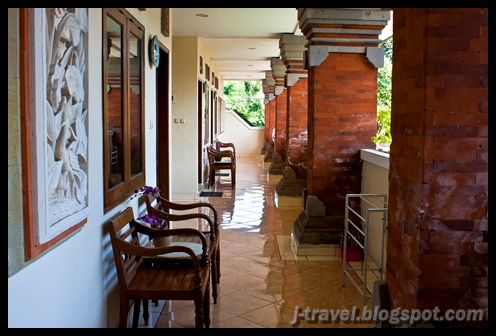
Clean and comfort corridor of the Hotel
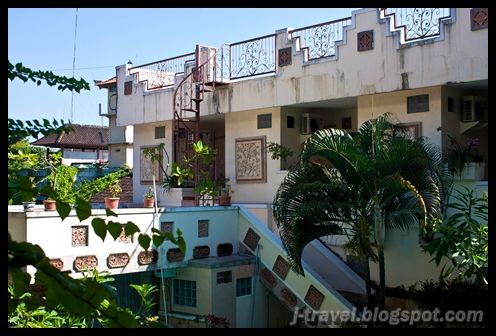
Another block of guests room just opoosite the block we stayed...
Our room was the last at 1st floor...yes! It was number '205'.
Every room has 2 wooden chair and a small table outside the room, it was the nice place where I had my 'Bintang' beer during night time! :)
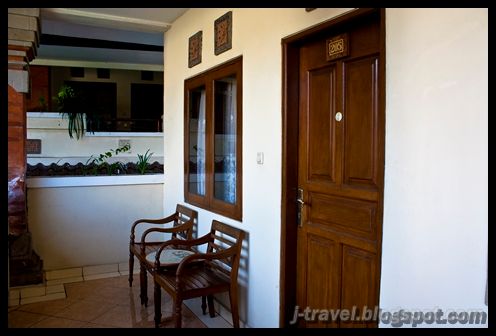
Our room at Bali Sorgawi Hotel.
We took the Family room with bed configuration of 1 queen bed and 1 single bed, package included simple breakfast to 3 persons, Nice fried noodle! (mee goreng). It cost USD60 (about MYR188.00) per day. Well, it was a reasonable price and the room was Spacious!
The booking was simple enough by just sent an enquiry via email to the hotel, no deposit is required. They even have airport transfer if you does not engage a driver. If you pay by credit card, 3% extra will impose in the hotel bill.
Let me show you the room...
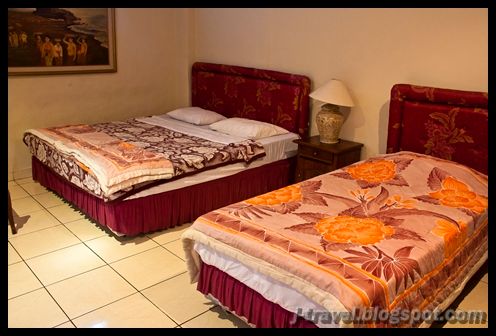
1 queen bed and 1 singke bed
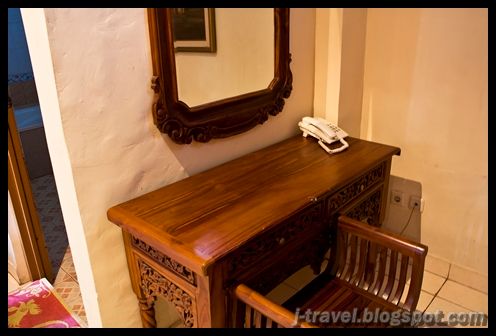
Nice Balinese deco of the table...
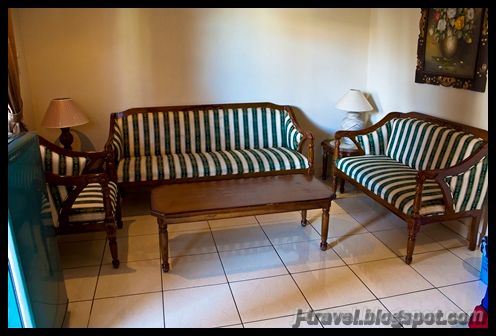
Spacious sofa area, with a small fridge.
The bathroom is equipped with a bathtub...
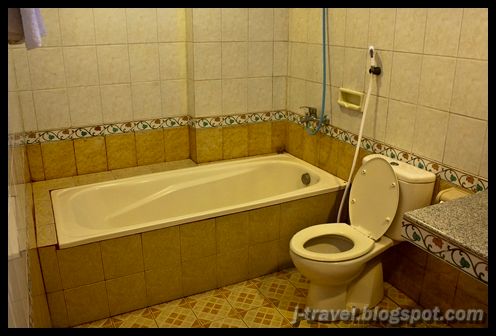
Bathroom with bathtub
We were satisfied with it except...the 'Unbearable stain' in the bathtub and the 'rusty' wash basin sink! And I can't find any glass in the room! Weird?!
The staffs here were not quite freindly (hardly to see their smile)...to my experience. Because they don't provide Hot water to the room, when I call to the room service...they asked me to get it myself at the cafe area. Maybe...it's the hotel policy!
Anyway, we were OK for A night stay here, I had to say it again...it was really convenient because of the location.
Bali Sorgawi Hotel
Jalan Legian Kelod, Kuta Beach
Bali 80361, Indonesia
phone. +62 (361) 755 266, 763 220
fax. +62 (361) 755 266
www.balisorgawi.com
Bali 80361, Indonesia
phone. +62 (361) 755 266, 763 220
fax. +62 (361) 755 266
www.balisorgawi.com
Related post :-
* My Bali trip on June 2011
* My Bali trip on June 2010
Location map of Bali Sorgawi Hotel at Kuta, Bali
Way off geographic topic but relevant: lost synagogues in New York
By Ruth Ellen Gruber
I -- and others -- have written much about and, hey, even taken part in, the process of seeking out, rediscovering and documenting former synagogues that have been transformed for other use in Europe.....Here's a fascinating story by Benjamin Kabin Weitzenkorn from the local newspaper the Queens Chronicle about a woman's search for "lost synagogues" in outer districts of New York City.
Levitt found that many of the former Jewish sites still -- as in Europe -- often retained evidence of their original function.
Read full article
I -- and others -- have written much about and, hey, even taken part in, the process of seeking out, rediscovering and documenting former synagogues that have been transformed for other use in Europe.....Here's a fascinating story by Benjamin Kabin Weitzenkorn from the local newspaper the Queens Chronicle about a woman's search for "lost synagogues" in outer districts of New York City.
On her birthday in 1999, Ellen Levitt decided to look for her mother’s former synagogue in Flatbush. The building was still there, but the congregation was gone, replaced by a Pentecostal Christian one. The news dismayed her mother, but for Levitt, it sparked an idea: to find and document other former synagogues, and to create a record so others could find them as well.
In 2009, her project became a book called “The Lost Synagogues of Brooklyn,” and this past November, Levitt released her latest installment, “The Lost Synagogues of the Bronx and Queens.”
As the project grew, Levitt discovered that synagogues that had not been burned or torn down were adapted for other uses. Some became private homes, one is a correctional facility, another is used for city maintenance and one is even a mosque — but most are now churches. Read moreIn New York, these transformations usually came about because of normal demographic changes that saw Jews moving from one neighborhood to another (often from small towns to cities or from to urban centers and suburbs), while in post-World War II Europe synagogues were most often orphaned by the murder of their community in the Holocaust, suppression by post-war communist regimes, or emigration of survivors. In Bulgaria, for example, whose Jews survived the Shoah, synagogues were left abandoned when almost all Jews moved to Israel.
Levitt found that many of the former Jewish sites still -- as in Europe -- often retained evidence of their original function.
The former Corona Hebrew School on 53rd Avenue, for example, boasts large stars of David on either side of its gate. Names written in Hebrew are displayed on pillars and walls on the porch. After the Jewish congregation left, the building became a private residence and music studio, and was home to Madonna, pre-fame, in the late 1970s.
Another great example is the former Young Israel of Laurelton on 228th Street. It’s a boxy 1956 building that displays a cornerstone with the Hebrew and secular dates. But its most intriguing feature is the huge window above the main entrance in the shape of a Jewish star, an emblem that the Jamaica-Queens Wesleyan Church has kept as is.
Read full article
Thursday, January 5, 2012
Poland/Lithuania -- Cooperation between Jewish cultural institutions
By Ruth Ellen Gruber
At the end of December, three key Jewish cultural institutes in Poland and Lithuania signed a cooperation agreement that will enhance and expand the Virtual Shtetl portal, an excellent and up-to-date news source for Jewish heritage and culture events and issues in Poland.
Virtual Shtetl reports:
At the end of December, three key Jewish cultural institutes in Poland and Lithuania signed a cooperation agreement that will enhance and expand the Virtual Shtetl portal, an excellent and up-to-date news source for Jewish heritage and culture events and issues in Poland.
Virtual Shtetl reports:
The co-operation agreement concluded between the Jewish Historical Institute Association, the Museum of the History of Polish Jews and the Center for Jewish Culture and Information in Vilnius governs the co-operation with regard to the administration of the ‘Virtual Shtetl’ portal.
Under this international agreement, the Lithuanian version of the ‘Virtual Shtetl’ portal will be created. The Center for Jewish Culture and Information in Vilnius, together with the teams from the Museum of the History of Polish Jews and the Jewish Historial Institute Association, will research the history of Jewish communities that lived in the territory of contemporary Lithuania and will promote the knowledge about Jewish cultural monuments in Lithuania on the ‘Virtual Shtetl’ portal.
It is the beginning of a very promising co-operation and it will be the first time that a foreign organization contributes so extensively to the development and administration of the ‘Virtual Shtetl’ portal. The concluded agreement paves the way to international research and cultural projects on the history of Jews in Eastern and Central Europe.

